

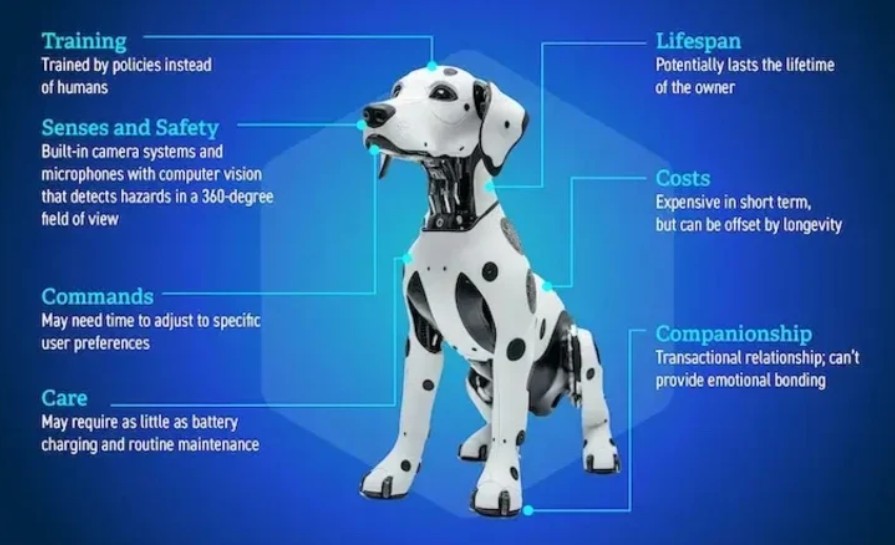
Georgia Tech researchers are developing a robotic guide dog to help blind and visually impaired people navigate independently. Led by Bruce Walker and Sehoon Ha, the project explores an alternative for people who cannot obtain or care for a service animal. Training costs and limited working lifespans constrain the availability of guide dogs, tells Tech Briefs.
The team is studying more than navigation technology. Its research considers what people want from a robotic companion, including its appearance, physical form, and behavior. Those choices affect whether prospective users feel comfortable adopting a machine intended to accompany them through public spaces and everyday activities.
Tech Briefs describes a system that works alongside its user through shared navigation. A person specifies a destination, and the robot plans a route, stays on sidewalks, and avoids obstacles such as signs, hydrants, and pedestrians. Requests can include intermediate stops rather than a single destination.
Communication through the harness is central to this partnership. When the robot changes direction to avoid an obstacle, the user feels the movement and adjusts accordingly. Feedback also travels in the opposite direction: pulling back asks the robot to slow down, while pushing can request a faster pace. The user contributes wayfinding skills throughout the journey.
Researchers envision safety capabilities, including cameras covering a full circle, computer vision for hazard detection, and voice recognition that could identify calls for help. These remain proposed features within an evolving research program, rather than confirmed functions of a commercial product.
The project is still in early development. Demonstrations, focus groups, and surveys are helping researchers assess acceptance and refine design decisions. Discussions with manufacturers, technology partners, designers, and disability organizations are also underway.
The article presents independence as the goal, with progress depending on both dependable robotics and communication that lets people remain active participants in their navigation.
