

ZURICH, Switzerland, Feb 19, 2026 – ABB has launched its first fully integrated gas analyzer package for Carbon Capture, Utilization and Storage (CCUS) projects. The system combines three ABB technologies into one platform for carbon capture operations. It delivers continuous CO₂ impurity detection and compliance monitoring across the CCUS value chain. Operators can track gas quality from capture through transport and storage. The package supports decarbonization in cement, waste to energy, oil refining, bioenergy, LNG, power generation and chemicals.
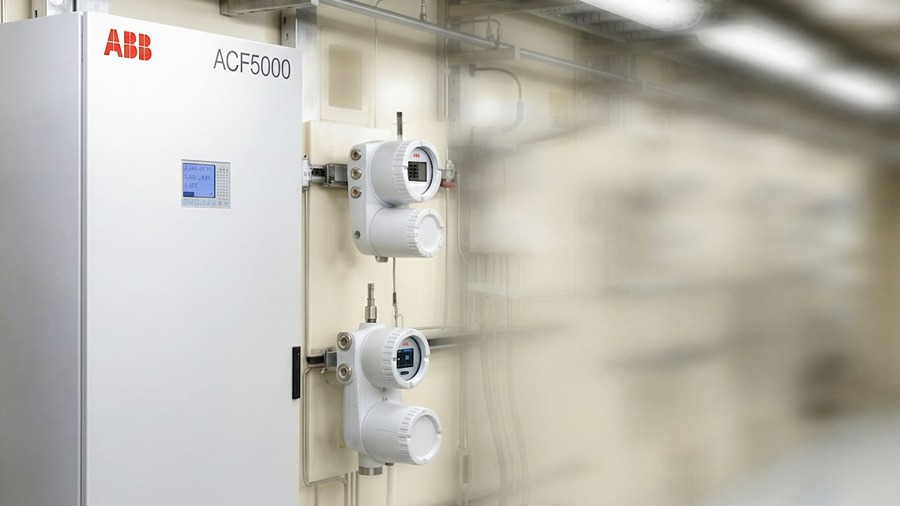
ABB integrates the Sensi+ CCUS laser gas analyzer, GCP100 process gas chromatograph, and ACF5000 CCUS FTIR infrared solution into one package. The platform monitors CO₂ stream quality from capture through transport and storage. Sensi+ CCUS, GCP100, and ACF5000 CCUS work together to detect trace impurities and support carbon capture operations that require CO₂ quality verification. Operators can manage CO₂ quality, protect pipelines, and meet CO₂ purity standards across the value chain.
ABB delivers the three technologies as one integrated package within a modular, fully equipped analyzer shelter. The design reduces procurement complexity and lowers engineering effort. The configuration also maintains consistent measurement performance across the CCUS value chain.
“CCUS operations need a broad range of measurements that require a suite of highly sensitive technologies,” said Jacques Mulbert, president of ABB’s measurement & analytics division. “ABB has the unique capability to fully engineer and integrate these technologies into industrial shelters, drastically reducing cost and engineering time whilst delivering high-performance and reliable turnkey CCUS solutions to its customers.”
CO₂ stream quality drives pipeline performance and regulatory compliance across carbon capture networks. H₂S, moisture, oxygen, and inert gases can change compressibility, increase corrosion risk, and trigger pipeline rejection. When operators fall out of CO₂ specification, they risk removal from CO₂ networks and may have to return emissions to the stack, incurring financial penalties. ABB’s integrated analyzer suite delivers continuous real-time measurement to track impurity levels and support process integrity in CCUS operations.
The solution integrates three ABB analyzers, each targeting specific impurities and measurement requirements:
- Sensi+ CCUS detects low-level contaminants with minimal cross-interference.
- GCP100 analyzes non-infrared-responsive gases using chromatographic methods, including cybersecurity and predictive maintenance capabilities.
- ACF5000 CCUS applies FTIR technology to measure multiple CO₂-related components, including in CO₂-rich streams.
ABB supports the solution through its global service network and asset health monitoring portfolio. AI-supported device health checks use ABB’s QR Codes, along with on-premise and cloud-based condition monitoring systems. Operators can also deploy ABB’s CCS 360 solution, which applies digital twin technology to plan, monitor, and optimize carbon capture network lifecycles.
About ABB

ABB is a global technology company specializing in electrification and automation, with headquarters in Zürich, Switzerland, and Västerås, Sweden. Formed in 1988 through the merger of ASEA and Brown, Boveri & Cie, ABB operates in more than 100 countries and serves sectors such as utilities, transportation, infrastructure, and manufacturing. Its portfolio includes robotics, industrial automation systems, electrification products, and motion solutions. The company draws on engineering and digitalization expertise to help industries improve performance and operate efficiently. ABB has a history of more than 140 years and employs about 110,000 people worldwide.
About ABB Automation
ABB Automation is a business area of ABB Ltd. that provides industrial automation products and services. It develops and supplies control systems, programmable logic controllers, measurement devices and analytics tools. The unit supports process, hybrid and maritime industries across energy, water, materials production and transport. It serves customers in oil and gas, chemicals, metals, mining, food and beverage, water and life sciences. ABB Automation also works with marine, ports and power generation operators. The business delivers software, hardware and engineering services, including maintenance, repair, consulting, training and cybersecurity support. Its systems link field equipment with plant and enterprise operations. ABB Automation employs about 26,000 people worldwide. The company is headquartered in Zurich, Switzerland.
