

The automotive industry is steadily expanding its use of additive manufacturing (AM), driven by growing confidence in the technology, improved production economics, and increasing demand for lightweight, customized, and high-performance components. While 3D printing has long been associated with prototyping, industry leaders now view it as a practical production tool for specific applications, particularly where design complexity, rapid iteration, and low- to medium-volume manufacturing offer clear advantages, tells Digital Engineering 24/7.
According to manufacturers including Conflux Technology, Protolabs, HP, and 3D Systems, the two biggest factors shaping AM adoption are cost and confidence. As certification data, production experience, and successful OEM programs continue to accumulate, engineering teams are becoming more willing to specify additive-manufactured parts. At the same time, advances in metal printing platforms, automation, materials, and workflow integration are reducing production costs and making the technology more competitive.
Although conventional manufacturing remains the most economical choice for high-volume production, additive manufacturing is proving its value in premium vehicles, motorsports, EV startups, aftermarket parts, and replacement components. It is particularly well suited for small, intricate parts that benefit from lightweight designs or frequent design revisions. Supply chain pressures are also encouraging manufacturers to embrace localized, on-demand production, reducing inventory requirements and shortening development cycles.
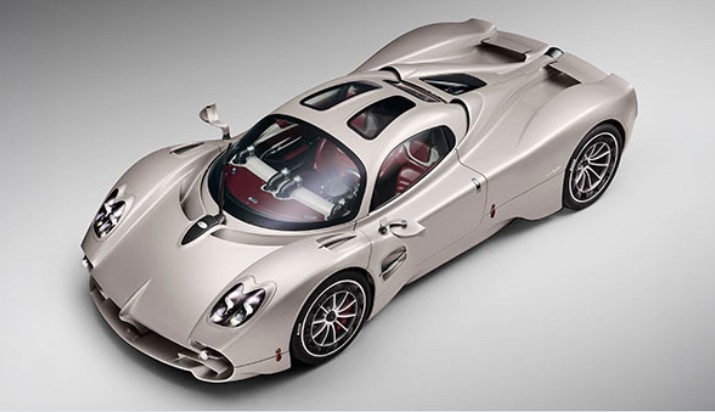
Several production programs demonstrate the technology’s growing maturity. Conflux Technology has developed 3D-printed heat exchangers and thermal management systems for vehicles such as the Pagani Utopia and Donkervoort P24 RS, achieving significant improvements in cooling performance. Protolabs highlighted applications ranging from racing exhaust systems for Harley-Davidson motorcycles to sensor housings, autonomous vehicle components, and customized accessories. HP pointed to Renault’s personalized vehicle accessories and custom car builder Blazin Rodz as examples of additive manufacturing moving into serial production.
Industry experts agree that additive manufacturing will not replace traditional manufacturing for mainstream automotive production. Instead, it will become an increasingly important part of a hybrid manufacturing strategy, supporting faster product development, greater design freedom, mass customization, and lightweight engineering. As automotive production shifts toward greater product variation, electrification, and shorter development cycles, additive manufacturing is expected to play an expanding role wherever flexibility, complexity, and performance outweigh the need for the lowest possible cost per part.
