

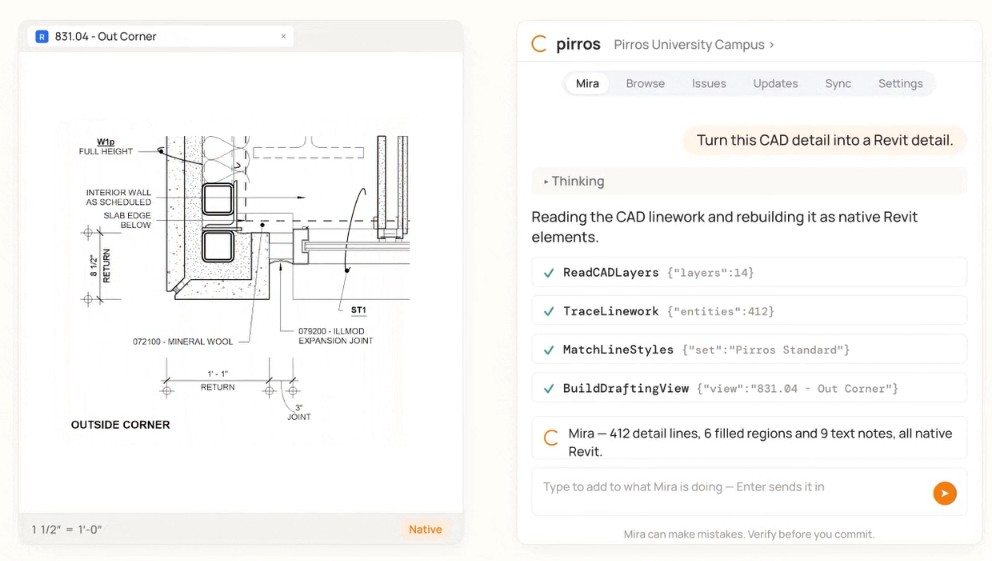
Digital transformation in architecture, engineering, and construction (AEC) has largely focused on cloud adoption, connected systems, and digital twins. However, Pirros argues that the industry has overlooked a critical step: making decades of accumulated project knowledge accessible and useful.
Architecture and engineering firms possess extensive information stored in Revit models, CAD drawings, BIM metadata, emails, requests for information (RFIs), and project documentation. Much of this knowledge remains disconnected from everyday workflows. According to Bluebeam’s AEC Technology Outlook 2026, only 11% of firms consider themselves fully digital, while nearly 40% experience collaboration difficulties across project lifecycles.
Pirros proposes a four-stage digital maturity model: cloud adoption, connected data, firm intelligence, and digital twins. The third stage transforms historical projects, standards, and design decisions into searchable information that employees and AI systems can access.
The benefits can be substantial. Pirros reports that customers indexing historical projects double their accessible firm standards within the first month. After a year, those standards expand sixfold to eightfold, revealing knowledge that previously existed but remained difficult to retrieve.
Legacy AutoCAD details represent another overlooked resource. Converting them into accessible Revit content helps firms preserve established design practices and avoid repeatedly recreating solutions.
AI integration further strengthens this approach. Through connectors such as Pirros Model Context Protocol (MCP), firms can make their details and families available within AI assistants, including Claude and ChatGPT. These systems can retrieve relevant information grounded in actual project history rather than generate unsupported recommendations.
The article also emphasizes preserving the reasoning behind design decisions. Senior architects can annotate standard details with explanations, questions, and lessons that guide younger professionals.
Ultimately, Pirros argues that meaningful digital transformation requires capturing institutional knowledge before pursuing sophisticated digital twins. Making existing information accessible creates a stronger foundation for AI-assisted design, collaboration, and decision-making.
