

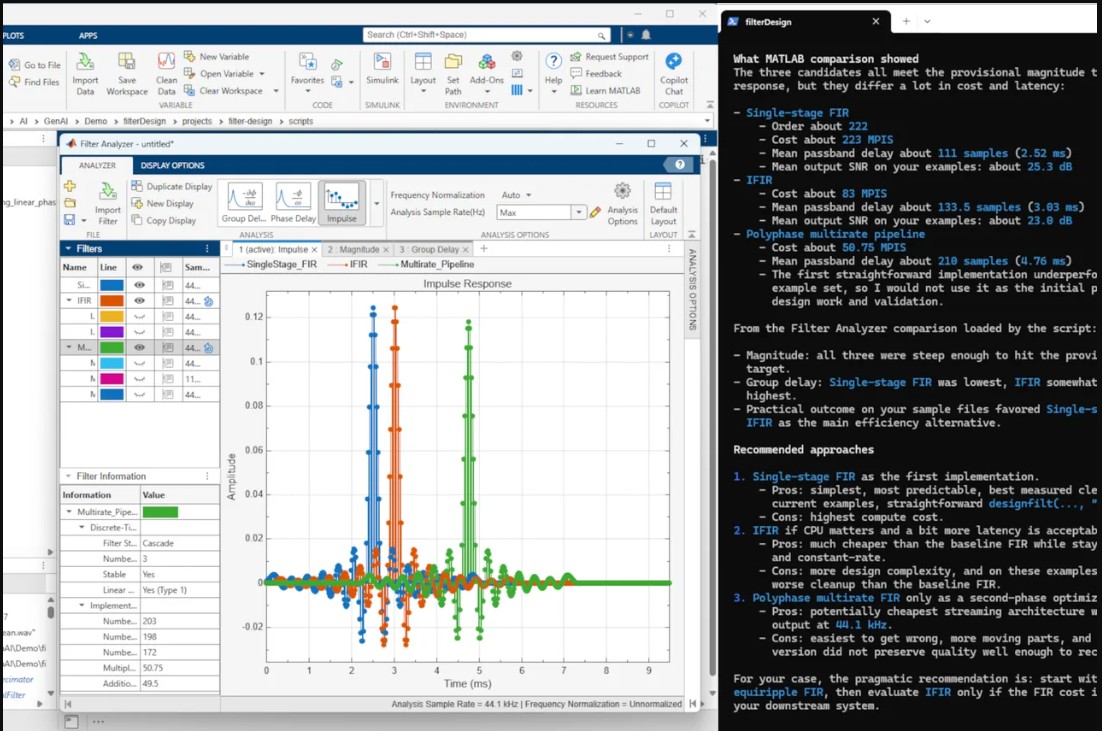
Agentic AI is emerging as a practical way to automate engineering tasks and improve coordination across design environments. In an interview with Design News, Jason Ghidella, senior principal technologist at MathWorks, discusses how AI agents can support engineers throughout product development by connecting tools, modifying models, and running simulations.
Ghidella emphasizes that successful AI integration begins with understanding an organization’s engineering goals. Rather than introducing AI without a defined purpose, companies should identify the tasks that agents can perform within existing workflows. These include modifying engineering models, drafting requirements, and executing multiple tests simultaneously.
A central challenge is the fragmentation of engineering tools. Product development often involves separate applications for modeling, simulation, and analysis. Poor integration can interrupt workflows and make it difficult to understand how changes in one engineering discipline affect another.
Agentic AI can help connect these activities, allowing engineers to evaluate interactions among physical, electrical, and thermal characteristics. This coordinated approach is particularly relevant to complex systems that require multidisciplinary analysis.
MathWorks supports agentic AI through its MATLAB programming environment and Simulink modeling and simulation platform. The company provides add-on toolkits that package engineering expertise and supply agents with the context needed to begin coding and executing tasks.
Under this approach, engineers establish design criteria while AI agents select appropriate simulations and evaluate alternatives. This division of responsibilities allows engineers to concentrate on requirements and design decisions while agents handle repetitive computational activities.
MathWorks says its tools support several AI coding assistants, including Claude Code, GitHub Copilot, Gemini CLI, Codex, and Amp. These integrations provide different ways to incorporate AI agents into established engineering environments.
The article highlights the importance of connecting engineering applications rather than treating AI as an isolated capability. By linking models, requirements, and simulations, agentic AI can help engineers manage design complexity, investigate alternatives, and make better-informed decisions throughout product development.
