

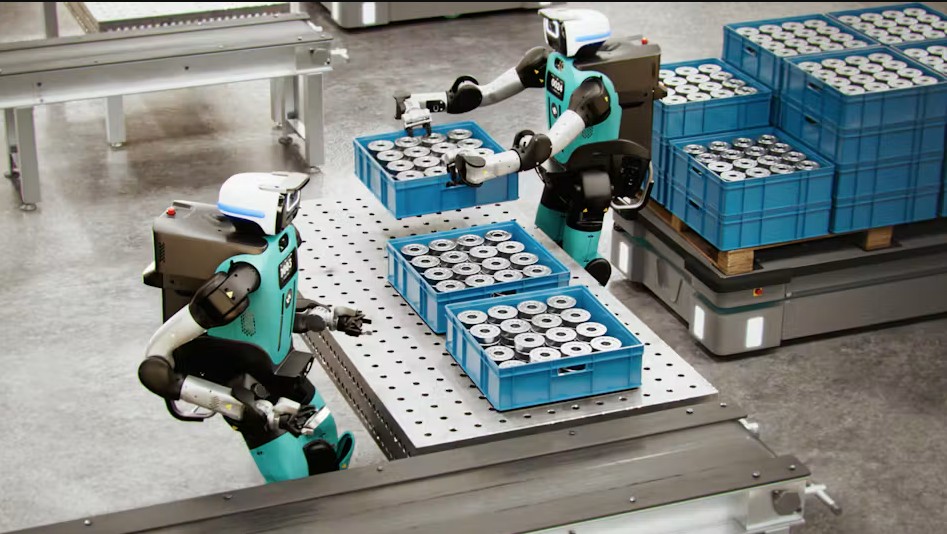
Agility Robotics has become the first publicly listed U.S. company dedicated exclusively to humanoid robotics, marking a significant milestone for industrial automation. Following its merger with Churchill Capital Corp XI, the company began trading on Nasdaq on November 5, 2026, under the symbols AGLT and AGLTW, tells Machine Design.
The transaction and associated financing generated approximately $465 million in gross proceeds, providing capital to accelerate production and commercial deployment of Agility’s next-generation Digit 5 humanoid robot.
The company has secured more than $300 million in multiyear Digit 5 orders, subject to contractual milestones and final product specifications. Initial customer deployments are expected during the first half of 2027, with general availability planned by year-end.
Agility’s existing Digit robots have accumulated more than 65,000 operating hours across facilities operated by GXO, Schaeffler, and Toyota Motor Manufacturing Canada. At GXO’s Georgia facility, the robots have transported more than 100,000 totes. Additional deployments at two U.S. logistics facilities are scheduled for early 2027.
Digit 5 incorporates cycloidal actuator technology designed for repetitive lifting of loads weighing up to 50 pounds. Interchangeable end effectors and improved manipulation capabilities aim to expand its industrial applications while supporting safer collaboration between humans and robots.
Agility is collaborating with Nvidia, FORT Robotics, and Nyobolt on computing, safety, and charging technologies. Nyobolt’s fast-charging system is designed to recharge Digit 5 in nine minutes, enabling more than 20 hours of operation within a 24-hour period.
To support manufacturing expansion, Agility operates RoboFab, a 70,000-square-foot facility in Salem, Oregon, designed to produce up to 10,000 robots annually. The company also maintains hardware and AI development operations in Fremont, California, and plans a 50,000-square-foot expansion in Pittsburgh.
The public listing represents an important step toward scaling humanoid robotics from specialized industrial deployments to broader commercial adoption.
