

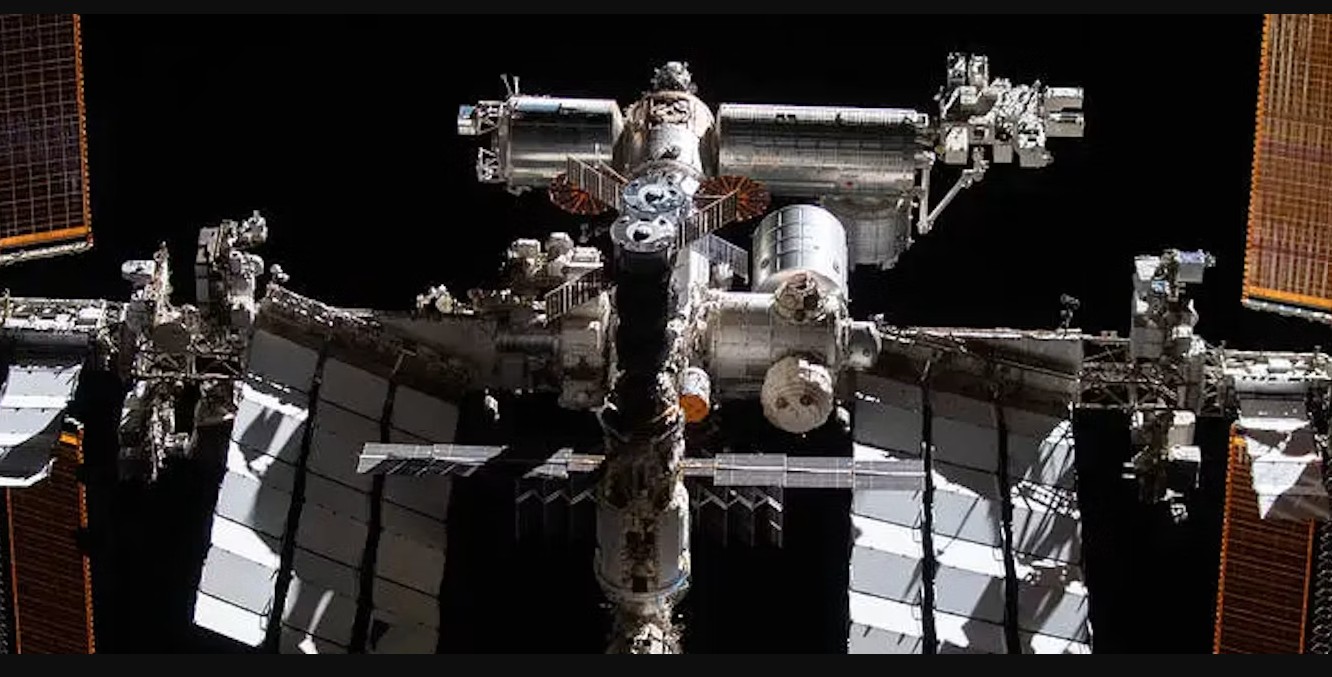
The International Space Station (ISS), a landmark of international cooperation and scientific research, is facing growing engineering and operational challenges as it approaches the end of its service life. The latest concern emerged on June 5, 2026, when NASA instructed five astronauts to take shelter inside a docked SpaceX Crew Dragon spacecraft and prepare for a possible emergency evacuation after an air leak in the Russian segment of the station worsened. Although the alert was lifted 90 minutes later, the incident underscored the increasing risks associated with operating an aging orbital laboratory, tells The Conversation.
The leak originates in the PrK transfer tunnel of the Russian-built Zvezda module, where fine structural cracks have repeatedly been sealed but never permanently repaired. While Roscosmos maintains that the slow leak does not pose an immediate threat, NASA views the deteriorating structure as a significant safety concern. Tensions between the two agencies became apparent when NASA rejected two Russian repair proposals, including one involving drilling into the station’s hull and another requiring the removal of a load-bearing bracket. Roscosmos has since decided to isolate the affected tunnel from the rest of the station.
The incident also highlights broader concerns about the future of human spaceflight in low Earth orbit. NASA has long planned to replace the ISS with commercially operated space stations, but those projects remain behind schedule. Vast’s Haven-1 is expected to serve only as a short-duration demonstration platform, while larger replacements from Vast, Axiom Space, and Starlab Space are still years away. Financial hurdles and slower-than-expected commercial investment have prompted lawmakers to propose extending ISS operations until 2032, ensuring that replacement stations are operational before retirement.
When the ISS is eventually decommissioned, NASA plans to use a modified SpaceX Dragon spacecraft to guide the 420-ton station into Earth’s atmosphere over the remote Pacific Ocean near Point Nemo. Even with a controlled reentry, large debris could survive the descent, raising legal questions under international space law regarding liability if damage occurs.
The article concludes that the ISS air leak is more than an isolated engineering issue. It illustrates the long-term maintenance demands of orbital infrastructure and the financial and technical realities of transitioning from government-operated stations to a sustainable commercial space economy.
