

Autodesk Inventor users have long relied on iLogic to automate repetitive design tasks. However, rule-based automation cannot address every engineering question. Leo AI explores how artificial intelligence agents can complement existing iLogic workflows by handling situations that fall outside predefined rules.
iLogic uses deterministic rules to control model configurations. When parameters change, it can automatically suppress features, update dimensions, change materials, or populate forms. Its predictable behavior makes it valuable for standardized components, revision control, and repeatable engineering processes.
The limitation emerges when engineers encounter unexpected design variations or inherit assemblies without documented design intent. An iLogic rule cannot explain an unusual dimension, locate a similar component, or identify an applicable engineering standard unless those conditions were explicitly programmed.
Leo AI addresses these gaps by reading CAD assemblies, drawing notes, and connected engineering documentation. Its integrations with platforms including Autodesk Vault, SolidWorks PDM, PTC Windchill, and Siemens Teamcenter allow engineers to retrieve previous design decisions, calculations, and relevant standards.
Rather than manually searching multiple systems, engineers can ask natural-language questions about existing designs and receive answers supported by source references.
The article proposes a hybrid approach in which iLogic continues managing established configurations while AI agents handle unanticipated questions and engineering knowledge retrieval.
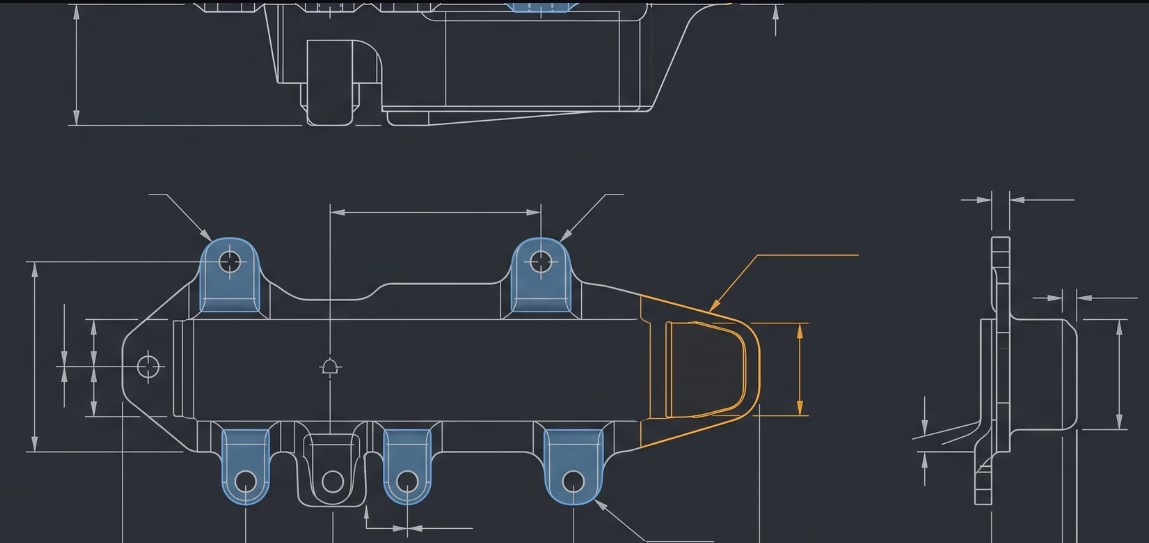
For example, iLogic can automatically modify a bracket when its load requirements change. An AI agent can help determine whether a similar bracket already exists or explain why a previous design used a particular dimension.
AI agents can also support future automation development. By identifying recurring design patterns, they help engineers determine which tasks justify creating additional iLogic rules.
Importantly, the agent does not replace Inventor or its existing automation. Instead, it provides an additional information layer around established engineering workflows.
For mechanical engineers, combining deterministic automation with AI-assisted knowledge retrieval could reduce repetitive searches, preserve engineering knowledge, and improve design reuse without disrupting proven CAD processes.
