

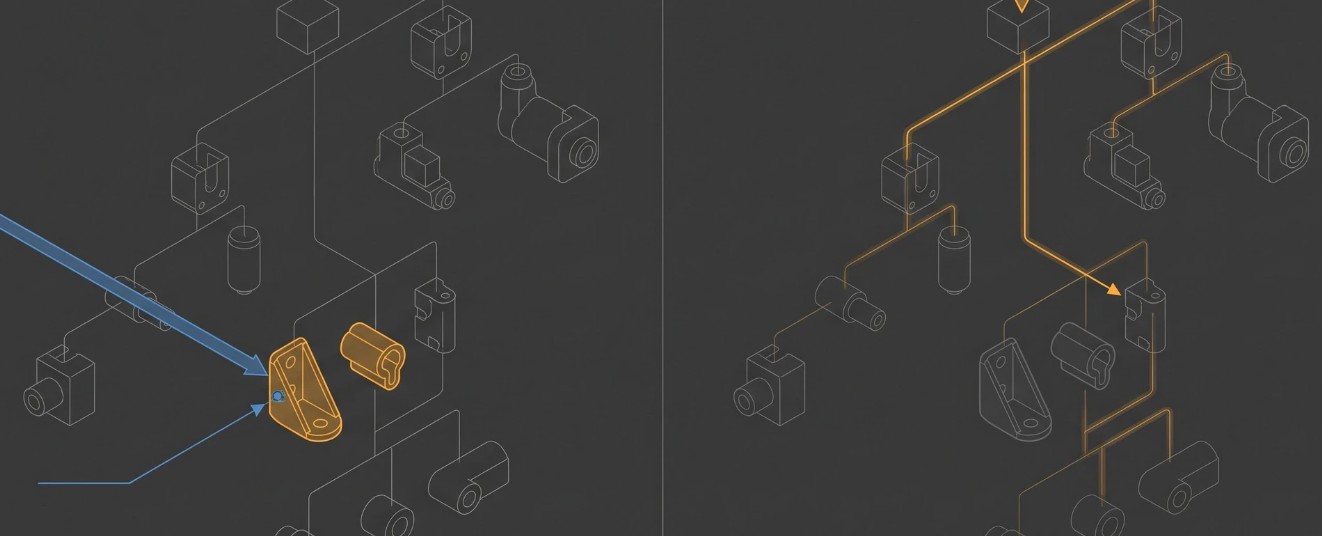
Connecting an outside AI agent to CATIA and 3DEXPERIENCE is not simply a matter of finding one API. According to Leo AI, the Dassault Systèmes environment offers two distinct access routes, each suited to different engineering tasks.
The first is CATIA’s automation layer, which operates through an active application session, typically on a Windows workstation. Using VBA, EKL, or a COM-compatible language, an agent can access the active document, specification tree, parameters, relations, sketches, and properties of loaded parts and products. It can also modify features and save changes. This makes it useful for repetitive jobs such as renaming parameters, checking required properties, or generating design variants.
However, session-based access has limits. The agent sees only loaded models and cannot determine the engineering reasoning behind design decisions. It also requires an available, licensed workstation. Because AI-generated changes directly affect models, Leo recommends logging modifications and maintaining human review.
The second route uses 3DEXPERIENCE web services. REST APIs provide server-side access to structured information, including product structures, item attributes, relationships, and lifecycle states. This approach is better suited to queries spanning many products because it does not require opening individual CATIA models. Authentication through 3DPassport and existing platform permissions determine exactly what an agent can access.
Neither route, however, provides the complete context behind engineering decisions. Information about previous design choices, standards, approvals, calculations, and lessons learned may reside in drawings, specifications, change records, ERP systems, or other repositories.
Leo therefore proposes a three-part architecture: CATIA automation for model-level work, 3DEXPERIENCE APIs for structured product information, and a separate knowledge layer for broader engineering context. The practical lesson is to identify where the information needed for each AI task actually resides before choosing an integration method.
