

Artificial intelligence is beginning to reshape mathematical research in ways that few experts anticipated just a few years ago. According to The Conversation, recent AI-assisted breakthroughs have sparked growing optimism that mathematics may be entering a new period of rapid discovery. While human mathematicians continue to produce the vast majority of new research, AI has demonstrated an ability to tackle problems once considered beyond the reach of machines, suggesting that the discipline is on the verge of a significant transformation.
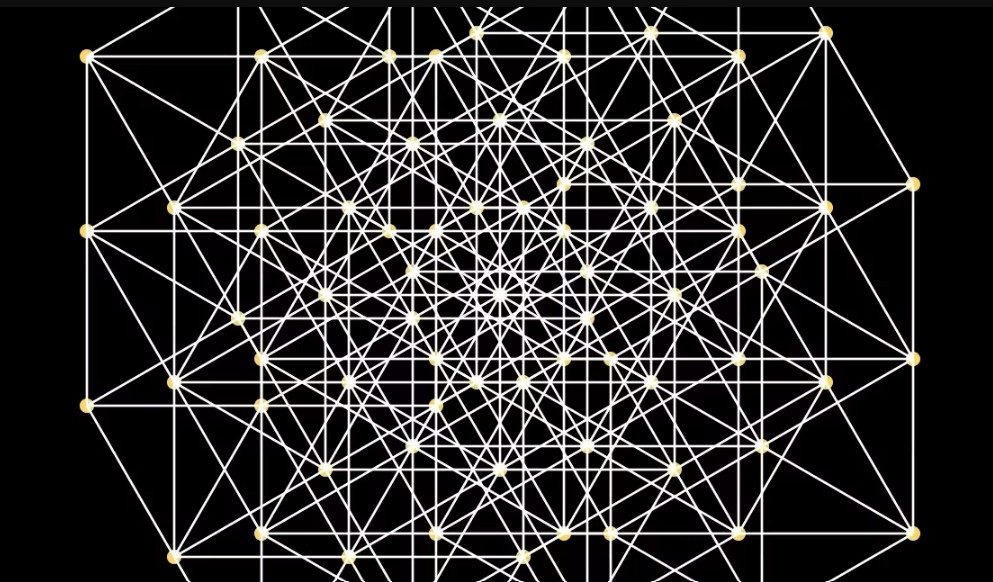
A key turning point came in 2026 when an AI system helped resolve the long-standing unit distance conjecture, a problem that had challenged mathematicians for decades. Rather than relying solely on brute-force computation, the AI generated novel mathematical ideas that researchers could analyze, verify, and build upon. The achievement highlighted that modern AI systems are becoming useful collaborators capable of proposing unexpected approaches instead of merely performing calculations.
The article argues that mathematics has always progressed through the combination of intuition, creativity, and rigorous proof. AI complements this process by rapidly exploring enormous numbers of possibilities, identifying hidden patterns, and suggesting promising directions for investigation. Human mathematicians remain essential because they formulate meaningful questions, judge the significance of results, and verify every proof with careful logical reasoning. AI may accelerate discovery, but it does not replace the insight and critical thinking required to advance the field.
This partnership could also broaden participation in mathematical research. By handling routine exploration and generating preliminary ideas, AI can free researchers to focus on conceptual breakthroughs and deeper theoretical understanding. Early-career mathematicians and specialists alike may benefit from tools that make advanced research more accessible and productive.
The article concludes that the future of mathematics is unlikely to be defined by competition between humans and AI. Instead, the greatest advances are expected to emerge from collaboration, with machines expanding the range of ideas that humans can explore. If current trends continue, AI could help launch a new golden age of mathematics, one driven not by automation alone but by the combined strengths of computational power and human ingenuity.
