

The sixth AIA26 show floor report highlights a growing presence of software vendors, reflecting the architecture industry’s accelerating adoption of artificial intelligence and digital workflows. Alongside established developers, several first-time exhibitors introduced tools designed to improve compliance, visualization, collaboration, and firm management, reports Architosh.
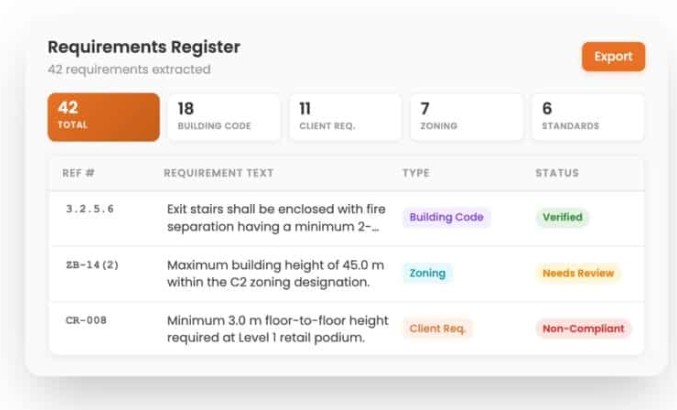
One of the newcomers was CODii, an AI-powered compliance platform that transforms project documentation into a searchable source of truth. By connecting to folders stored on platforms such as SharePoint or Google Drive, the software automatically classifies documents as project requirements or deliverables. Architects can then use natural language queries to search project data, verify obligations, and perform quality assurance and quality control across drawings, specifications, reports, and calculations.
Another AI-focused solution, CodeComply.AI, streamlines building code reviews by analyzing uploaded plan sets. The platform performs jurisdiction-specific code checks, evaluates design alternatives, and generates cited documentation while supporting standards such as the IBC, ADA, NFPA 101, and customized local codes. Its VersionVue feature uses AI to compare different plan revisions, highlighting changes through color-coded visualizations that simplify design review.
Visualization also featured prominently. xFigura.AI demonstrated a creative platform with more than 45 AI models tailored to architectural workflows. Its infinite canvas allows designers to organize node-based processes for tasks including sketch-to-render, image-to-render, render enhancement, image-to-video, and image-to-3D generation, offering an intuitive environment without the complexity of traditional algorithmic design tools.
Real-time rendering remained a key focus. D5 Render attracted significant attention, particularly with news that a native macOS version is in development. Built on its proprietary rendering engine, D5 uses full path tracing and optimized shader technology to handle large architectural models efficiently across Windows and future Apple Silicon systems. Lumion also expanded its Mac strategy through Lumion View, a lightweight SketchUp plugin, while Lumion 2026.1 introduced ray-traced panoramas, parallax interiors, and other visualization enhancements.
The report also examined business management platforms, including Factor A/E and Monograph. Both offer project accounting, budgeting, staffing, forecasting, and billing, although they differ in customization, invoicing flexibility, and support for construction cost-based fee structures. Together, the showcased products illustrate how AI, visualization, and operational software are reshaping architectural practice.
