

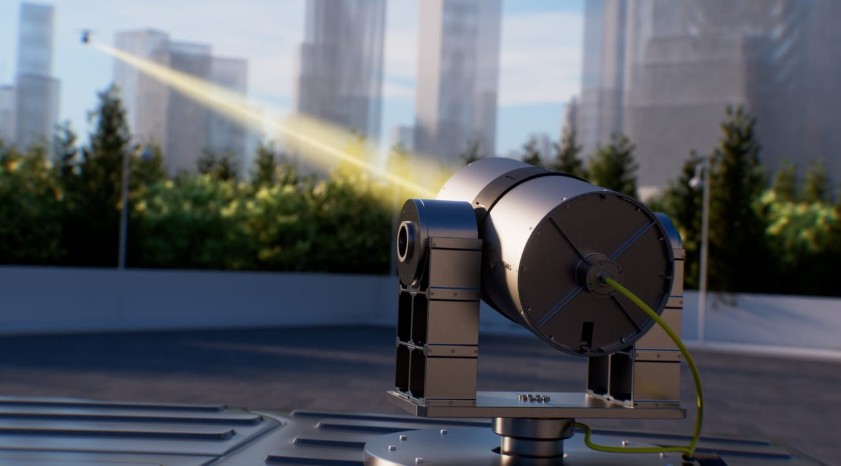
Battery limitations restrict how long drones and other unmanned autonomous vehicles can remain in operation. SunCubes is developing laser-based wireless energy transfer technology designed to recharge these vehicles during flight or at remote stations without requiring physical electrical connections, tells Design News.
Developing such a system presents complex engineering challenges. SunCubes is using SimScale’s Simulation Cloud and Physics AI technologies to support the design, optimization, and validation of its drones and wireless energy transfer hardware. The tools allow engineers to perform simulations across multiple physics domains while increasingly using AI to assist with simulation setup, execution, and analysis.
SimScale also fits into SunCubes’ existing engineering workflow. The company uses KiCad for printed circuit board design and Onshape for mechanical design. Direct integration between SimScale and Onshape allows engineers to access CAD documents without repeatedly exporting and uploading models. This connection shortens the cycle between design changes and simulation.
SunCubes sees particular value in AI for repetitive and iterative engineering analysis. Multidisciplinary optimization often creates interconnected simulation loops. A structural modification to a drone, for example, can alter its thermal behavior, while changing thermal conditions can subsequently affect structural performance.
AI can automate and coordinate these repeated analyses instead of requiring engineers to manually configure every simulation cycle. This could make it easier to investigate design alternatives and identify suitable configurations.
The same approach can benefit product families in which geometry, dimensions, or materials vary while the underlying simulation methodology remains similar. AI agents can reproduce established simulation workflows across multiple variants while adjusting relevant parameters.
For SunCubes, AI-assisted simulation is therefore less about replacing engineering decisions and more about reducing repetitive work. As the technology moves toward commercialization, simulation is becoming increasingly important for optimization and engineering validation of its wireless charging systems.
