

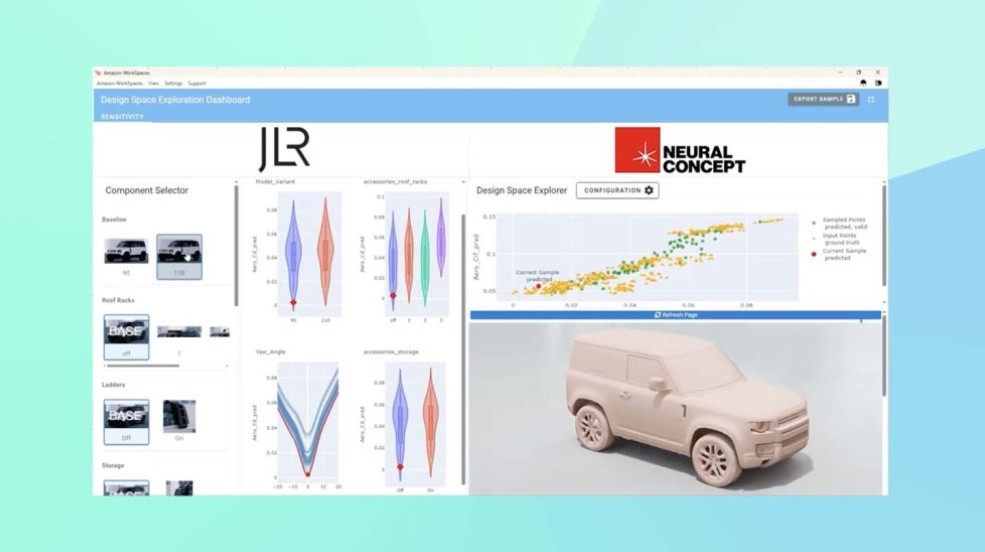
Artificial intelligence is moving beyond isolated engineering tools to become an integral part of the entire product development process. In this interview published in Develop 3D, Neural Concept co-founder and CTO Théophile Allard explains that the company’s vision is not to replace engineers or traditional simulation software, but to use AI to connect design, simulation, and organizational knowledge into a unified engineering workflow. Founded in 2018 at EPFL in Switzerland, Neural Concept began by developing deep learning models for aerodynamic and multiphysics simulations before expanding into AI-powered engineering automation.
Allard argues that AI surrogates should complement, not replace, physics-based simulations. By learning from previous simulation results, AI can eliminate repetitive calculations, automate routine tasks, identify similar design cases, and guide optimization more efficiently. This allows engineers to spend less time on manual iterations and more time solving complex design problems while maintaining confidence in simulation-driven decisions.
A central theme of the discussion is engineering knowledge. According to Allard, manufacturers risk losing decades of expertise as experienced engineers retire or become unavailable. Neural Concept aims to capture this knowledge and embed it into AI-driven workflows so organizations retain their competitive advantage. Rather than creating one universal engineering model, the company focuses on helping each manufacturer build its own AI-powered engineering intelligence using proprietary data, processes, and best practices.
The interview also explores the broader organizational challenges of adopting AI. Allard believes that successful implementation requires changes in engineering culture, IT infrastructure, and employee training. Companies must become comfortable with continuous software updates, cloud-based workflows, and AI-native development practices while maintaining compatibility with existing CAD, CAE, and proprietary tools. Neural Concept therefore emphasizes open integration across multiple software platforms instead of forcing customers into a single ecosystem.
Looking ahead, Allard expects AI to enable intent-driven engineering, where automation handles routine processes while engineers focus on creativity, innovation, and strategic decision-making. As product development grows more complex, organizations that successfully combine AI with their own engineering expertise will be better positioned to accelerate innovation without sacrificing quality or institutional knowledge.
