

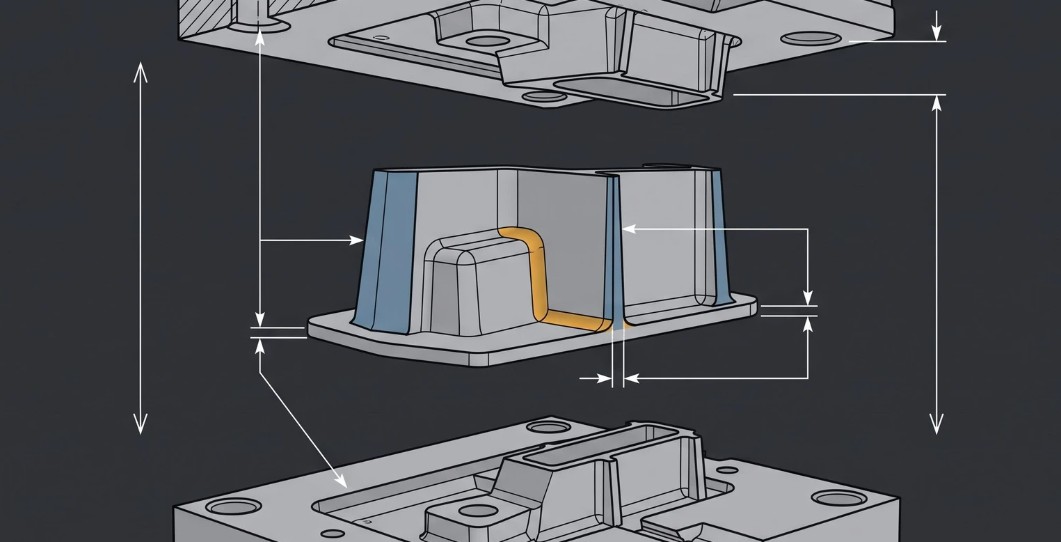
Design for manufacturing, or DFM, ensures that a component can be produced using its intended process, cost, and production volume. Yet manufacturability problems often survive CAD reviews because checks happen too late, inconsistently, or depend on knowledge held by experienced engineers, says Leo AI.
Most DFM reviews examine five areas: wall thickness and uniformity, draft angles and undercuts, tolerance stack-ups, tool and fixture access, and compatibility between materials and manufacturing processes. The specific requirements change depending on whether a component will be CNC machined, formed from sheet metal, injection molded, cast, or additively manufactured.
For CNC machining, engineers must consider cutter access, internal corner radii, pocket depth, and the need for additional machining axes. Sheet metal introduces constraints involving bend radius, grain direction, hole placement, and K-factor. Injection molding emphasizes uniform walls and adequate draft, while additive manufacturing introduces considerations such as overhangs, minimum feature sizes, and build orientation.
Leo AI argues that the larger problem is not understanding these rules but applying them consistently. Formal DFM reviews often occur after geometry has matured, making changes more expensive. Manual reviews also become difficult when engineers must check dozens of parts across several manufacturing processes.
The company proposes continuous AI-assisted manufacturability reviews. Leo works alongside existing CAD, PDM, and PLM systems, checking designs against an organization’s standards, previous designs, and process-specific manufacturing rules as geometry evolves.
The system can flag issues involving wall thickness, draft, tolerances, tool access, and material-process compatibility on every revision. It can also retrieve reasoning from previous projects and internal engineering documents.
AI does not replace final engineering approval. Instead, the approach moves DFM checks earlier, when correcting a feature may require a simple CAD edit rather than redesigning a completed assembly or modifying expensive tooling.
