

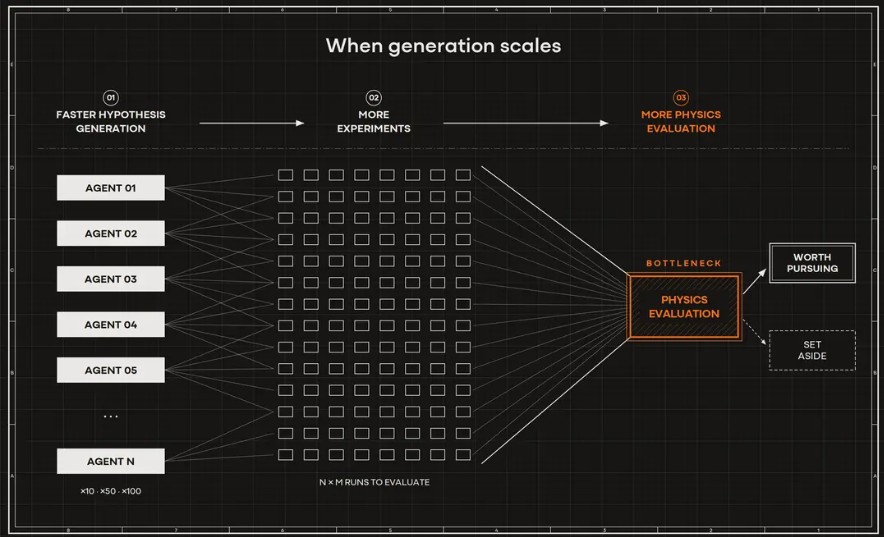
AI agents can generate chip design alternatives faster than engineers can evaluate them. ChipAgents argues that this imbalance will become a constraint in an AI-native semiconductor workflow. When agents propose implementations in parallel, the question shifts from producing ideas to deciding which ones merit physical analysis.
The challenge is sharp in three-dimensional integrated circuits. Thermal behavior, timing, power consumption, and electromigration or voltage drop interact. A change that improves one metric can worsen another. Traditional workflows move through a sequence: an engineer changes a design, runs tools, reviews results, and chooses the next experiment. Parallel agents could produce hundreds of candidates before detailed simulation can catch up.
ChipAgents proposes evaluating designs in stages. Fast, approximate estimators would reject weak options. More accurate tools would examine the survivors, and only a few finalists would undergo signoff analysis. The article illustrates the concept with a hypothetical 100 candidates, narrowing them to 10 and then to a handful. Its suggested error and speed figures illustrate a tradeoff rather than report measured performance: an estimate unsuitable for final validation may still rank early alternatives well enough to save time and computing resources.
This approach changes what designers might demand from electronic design automation tools. An agent may value a programmatic interface, low latency, modest cost per run, and an explicit uncertainty estimate more than a detailed report for every tentative idea. Engineers still need high-fidelity results when making final design decisions. Fast screening matters only if it reliably preserves promising paths.
The article does not suggest replacing established physics or signoff tools. Instead, it calls for a hierarchy that directs expensive evaluation toward the strongest candidates. Its central claim is that the productivity of autonomous chip design will depend on how efficiently agents allocate verification effort as their capacity to generate new designs grows.
