

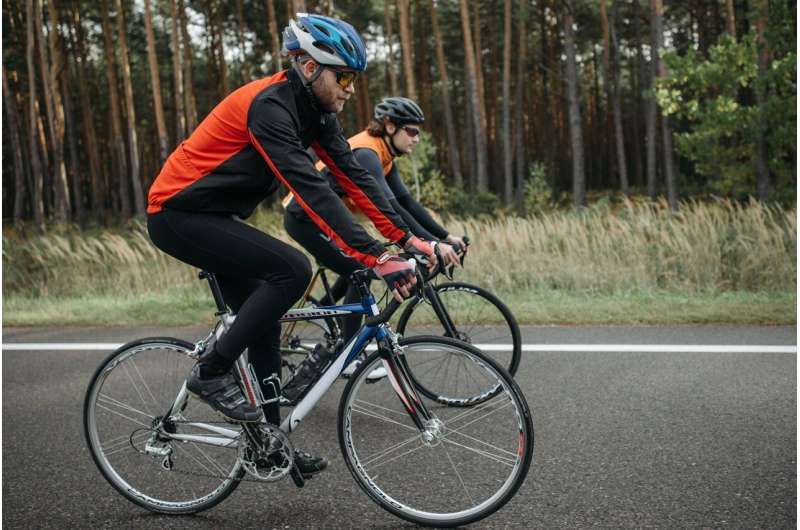
Researchers at La Trobe University’s Holsworth Biomedical Research Centre are developing artificial intelligence models that could turn smartphone videos into tools for analyzing cycling performance. The technology aims to estimate the forces cyclists apply to their pedals, potentially making measurements currently associated with specialized biomechanics laboratories available to everyday riders, tells Tech Xplore.
The research addresses both performance and injury prevention. More than 1.4 million Australians ride bicycles daily, while previous research led by La Trobe Associate Professor Rodrigo Rico Bini found knee pain to be among the most common overuse problems affecting cyclists. Understanding a rider’s movements and pedal forces could help identify positions that place excessive stress on muscles, tendons, and bones.
The researchers are using deep learning to connect a cyclist’s movements with the forces generated during pedaling. Their model is trained using synchronized laboratory measurements of pedal forces and video-based motion data. By learning the relationship between the two, the system can predict force throughout each pedal stroke.
Smartphones make this approach particularly promising because they can capture motion without specialized equipment. Although the current research relies on video, the same method could eventually incorporate data from wearable sensors or marker-based motion-capture systems.
The project expands on earlier work with researchers in Spain that showed AI could accurately estimate cycling forces from motion data. The latest phase focuses on developing methods that can scale beyond laboratories and operate in real-world environments. Bini is also working with Associate Professor Felipe Arruda Moura of Brazil’s State University of Londrina to strengthen the datasets used to train and validate the models.
The technology remains at an early stage. However, researchers envision smartphone applications within 5–10 years that could estimate cycling forces from video, helping riders improve performance and recognize potential injury risks without undergoing specialist biomechanical testing.
