

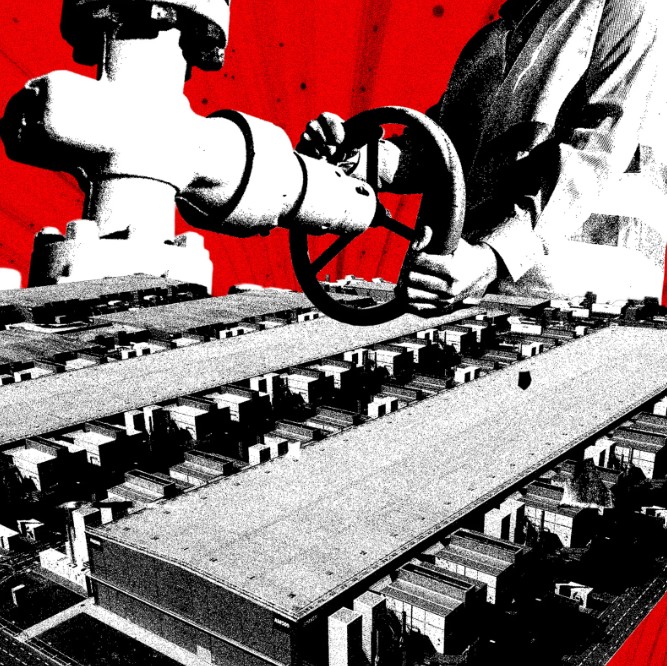
Artificial intelligence is creating a lucrative new market for the U.S. fossil fuel industry as technology companies seek enormous amounts of electricity for data centers. Wired.com reports that Chevron and Williams are emerging as major beneficiaries, investing in natural gas plants and pipelines designed specifically to serve hyperscale computing facilities.
Grid constraints are driving much of this development. Connecting large data centers to existing electrical networks can take years, prompting technology companies to consider behind-the-meter power plants that operate independently of the grid. BloombergNEF estimates that rising natural gas demand, partly driven by data centers, could require U.S. production to increase 36% by the mid-2030s.
Williams is building six behind-the-meter gas plants for data centers, including four serving Meta facilities in Ohio. The company announced more than $5 billion in data center investments in July and is also constructing pipeline infrastructure with additional capacity for future projects. Four Williams plants with permit applications could emit up to 9.6 million tons of greenhouse gases annually, although the company says actual emissions could be substantially lower.
Chevron is pursuing an even larger project. Its 2.67-gigawatt Texas power plant will supply a Microsoft data center under a 20-year power purchase agreement. According to its permit, the facility could produce more than 11.5 million tons of carbon dioxide equivalent annually. Chevron says the plant could eventually incorporate renewable generation.
Together, five permitted projects highlighted by the two companies could emit as much as 21 million tons of greenhouse gases annually, roughly comparable to Guatemala’s yearly emissions.
Both companies see data center power as a long-term opportunity and are considering additional projects. Yet the expansion raises a broader concern: infrastructure built to satisfy AI’s immediate electricity needs could operate for decades, potentially locking technology companies into fossil fuels even as the wider power grid transitions toward cleaner energy.
