

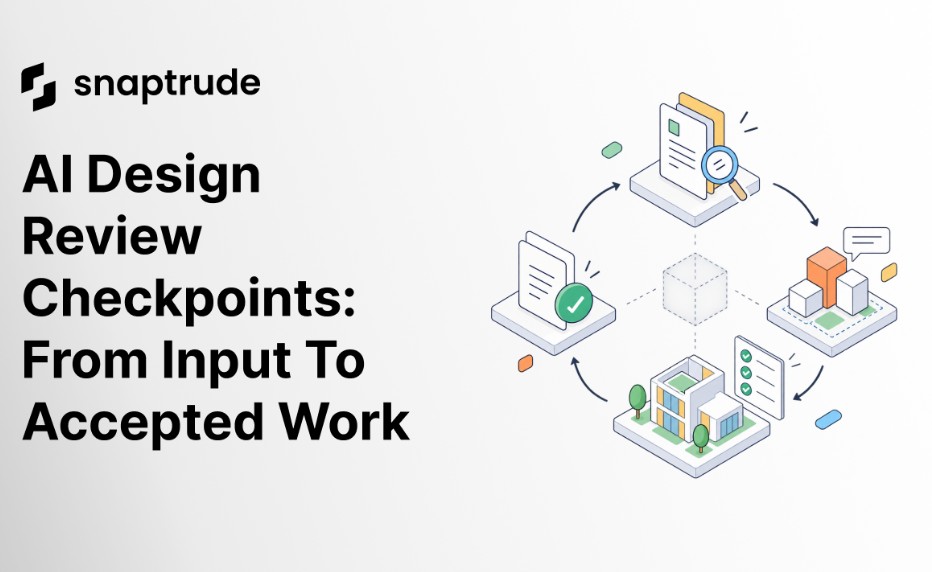
AI-assisted design can complete a task successfully without producing work that is ready for architects to accept or use. Snaptrude says that architecture teams need explicit review checkpoints to distinguish automated processing from professional approval. Its proposed framework covers four stages: input, proposal, result, and next use.
The first checkpoint verifies the information entering the workflow. Teams should confirm the source, revision, units, meaning, and intended scope before AI acts on the data. Extracted room numbers, areas, or other values should be compared with source material, while missing information should remain visible rather than being replaced by AI-generated assumptions.
The proposal checkpoint determines whether a planned change is permitted. Reviewers should know which objects can change, what must remain fixed, and where results will appear. Importantly, permission to execute an operation does not constitute approval of its eventual output. Teams can establish standing authorization for repetitive, well-defined tasks while requiring additional review when AI moves outside those boundaries.
After execution, reviewers should separately record whether the operation completed and whether its results passed required checks. Geometry, information, relationships, revisions, and dependent outputs may all need inspection. A successful software status should never automatically become design approval.
The fourth checkpoint determines whether another person can rely on the output for a specific purpose. Teams should identify the approved artifact, its revision, source information, completed checks, and remaining limitations. Approval for concept review, for example, does not automatically authorize the same information for a later project stage.
Snaptrude also recommends keeping partial failures visible and assigning unresolved issues to specific people. Its framework is a proposed team workflow rather than an automated Snaptrude approval system. The broader message is practical: AI can accelerate architectural work, but qualified professionals still need to control when AI-generated results become accepted project information.
