

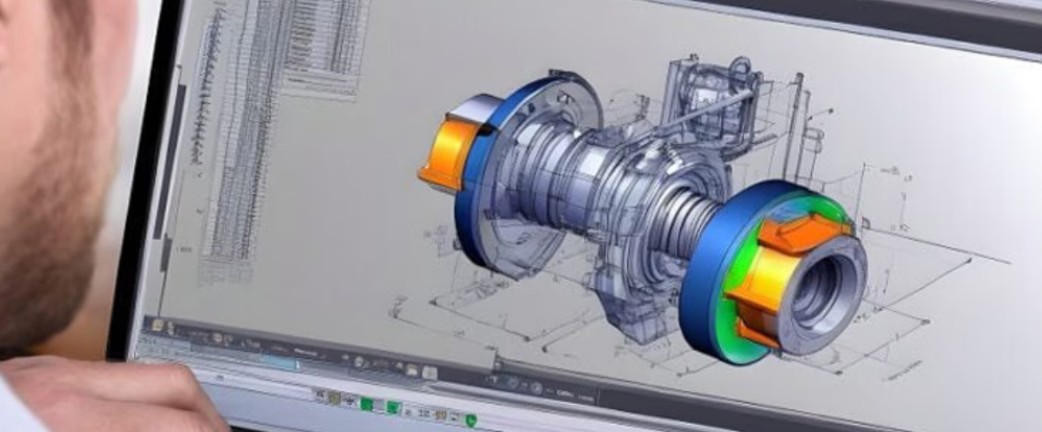
Artificial intelligence (AI) is transforming finite element analysis (FEA) from a traditional design verification tool into an active optimization process. By combining machine learning with established simulation software, engineers can evaluate more design alternatives, reduce development time, and improve product performance.
Conventional FEA workflows involve creating CAD models, generating meshes, defining boundary conditions, running simulations, and interpreting results. Engineers then modify designs and repeat the process. According to Leo AI, these cycles can take hours or days, often limiting teams to three to five iterations.
AI-driven optimization automates this process by systematically exploring design parameters such as wall thickness, material selection, rib placement, and geometric features. Intelligent algorithms use simulation results to identify promising configurations without requiring engineers to manually evaluate every possibility.
Surrogate modeling offers significant efficiency improvements. Machine learning models trained on selected FEA simulations can predict outcomes for thousands of additional designs. Leo AI suggests this approach could reduce studies requiring 500–1,000 simulations to approximately 50–100 runs.
Multi-objective optimization further helps engineers balance competing requirements, including weight, stiffness, fatigue resistance, and manufacturability. Combined with topology optimization, these techniques can generate lighter components while maintaining structural integrity. The article reports potential weight reductions of 20–40%.
However, successful optimization requires more than simulation software. Engineers need access to material properties, design standards, historical results, and manufacturing constraints. AI platforms connected to product lifecycle management (PLM) and product data management (PDM) systems can retrieve relevant technical information and support informed decisions.
Existing tools such as Ansys, Abaqus, and SolidWorks Simulation can remain central to these workflows, with AI managing parameter exploration and analyzing results.
Ultimately, AI-driven FEA optimization enables engineering teams to investigate broader design possibilities while retaining human oversight and physics-based validation, potentially improving efficiency, product quality, and engineering knowledge reuse.
