

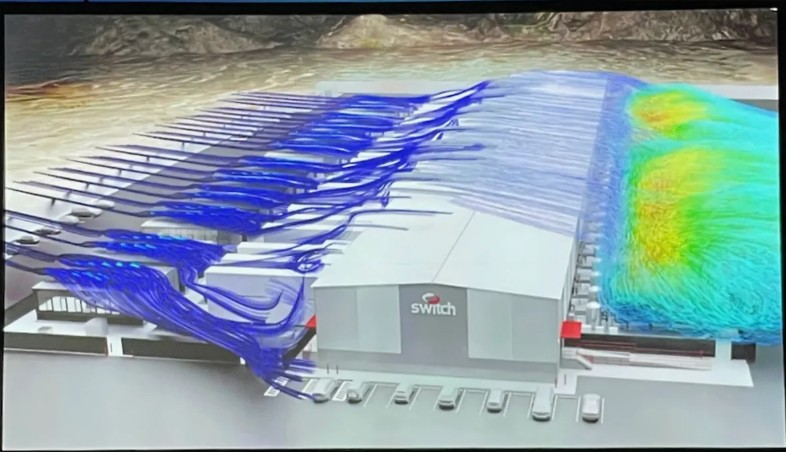
AI factories are emerging as a new class of infrastructure that could reshape engineering work. Unlike conventional data centers, these facilities combine computing, networking, power, cooling, data pipelines, simulation, and AI training as tightly integrated systems designed to produce intelligence at scale, tells Design News.
For engineers, this shift will change both tools and workflows. Traditional sequential, document-based processes could increasingly give way to model-driven engineering supported by AI and digital twins. AI factories can provide the computing power needed to explore larger design spaces, run physics-intensive simulations, improve virtual twins, and evaluate numerous design combinations faster than engineering teams could manually.
Their influence will extend beyond product development. AI factories are becoming strategically important infrastructure, comparable with power plants and semiconductor fabs. They could support advanced manufacturing, semiconductor development, energy optimization, robotics, aerospace, and other industries. As AI moves into physical systems, mechanical, electrical, and systems engineers will increasingly use these facilities to simulate, test, and deploy machines before manufacturing them.
Engineers may also benefit from automation of routine work, including documentation, data classification, requirements tracing, and verification support. This could free them to concentrate on system architecture, trade-off analysis, innovation, and engineering judgment. Energy demand will make sustainable power engineering critical.
However, the transition carries risks. Repeatable tasks such as drafting, basic modeling, simple coding, and routine analysis may be automated. Overreliance on AI could also expose engineering projects to hallucinations, hidden errors, overlooked edge cases, and unsafe decisions. Excessive dependence on automated recommendations may weaken first-principles thinking, failure analysis, and engineering intuition.
The article argues that engineers should prepare by combining domain expertise with systems thinking, modeling, data analysis, and AI literacy. Those who can critically evaluate AI-generated results, rather than accept or compete with them, will be better positioned as AI factories become central to engineering and manufacturing.
