

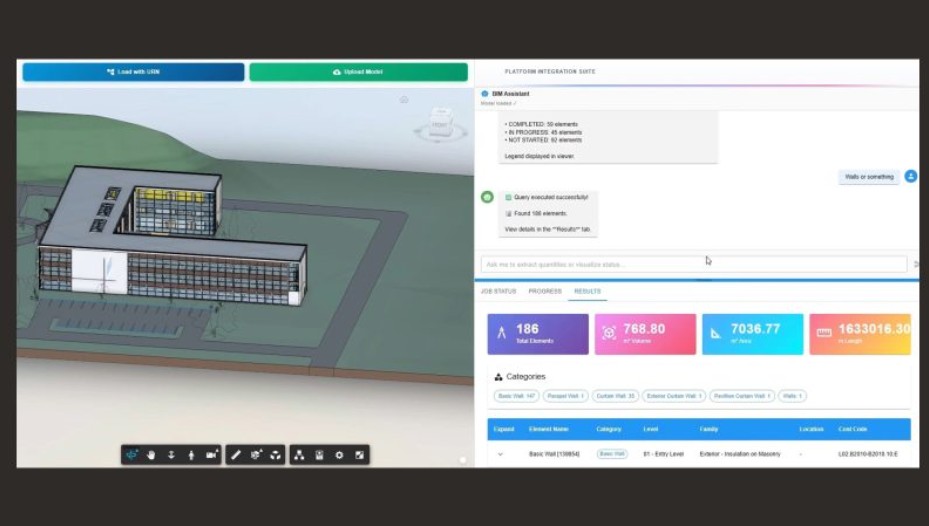
Artificial intelligence is enabling architects, engineers, and construction professionals to develop custom software without extensive programming experience. However, the rapid growth of AI-generated applications is creating new challenges involving security, reliability, maintenance, and accountability.
In an interview with AEC Magazine, Igor Tsinman, president and CEO of AMC Bridge, discusses the opportunities and risks associated with AI-assisted software development, often called vibe coding.
AI tools allow employees to create applications that automate repetitive tasks, connect disconnected systems, and improve access to building information modeling (BIM) data. According to AMC Bridge’s internal research, AI can reduce coding time by 70%–80% for routine operations. However, improvements are smaller for complex geometry processing and specialized engineering calculations.
Tsinman recommends combining established commercial software with custom applications tailored to specific business requirements. Rather than rebuilding existing capabilities, firms should develop tools that address workflow gaps.
The greater challenge involves managing applications after development. Many organizations already depend on undocumented scripts, plug-ins, and AI-generated utilities created by individual employees. These tools may access sensitive project information or modify production models without adequate oversight.
Tsinman proposes three measures: identifying existing applications, auditing their functionality and security, and temporarily restricting deployment of unverified tools. Applications intended for production require documented ownership, controlled access, testing, maintenance, and recovery procedures.
Model Context Protocol (MCP) introduces additional considerations by allowing AI agents to interact with engineering platforms. Although MCP simplifies integration, it does not eliminate underlying API limitations or security risks. Any automated modification to project models should be authorized, validated, and recorded.
Running AI locally offers greater data control but transfers infrastructure, security, and operational responsibilities to the organization.
Ultimately, AI makes software creation faster and more accessible, but professional accountability remains essential. AEC firms must distinguish experimental applications from production systems and establish governance practices that protect project integrity without discouraging innovation.
