

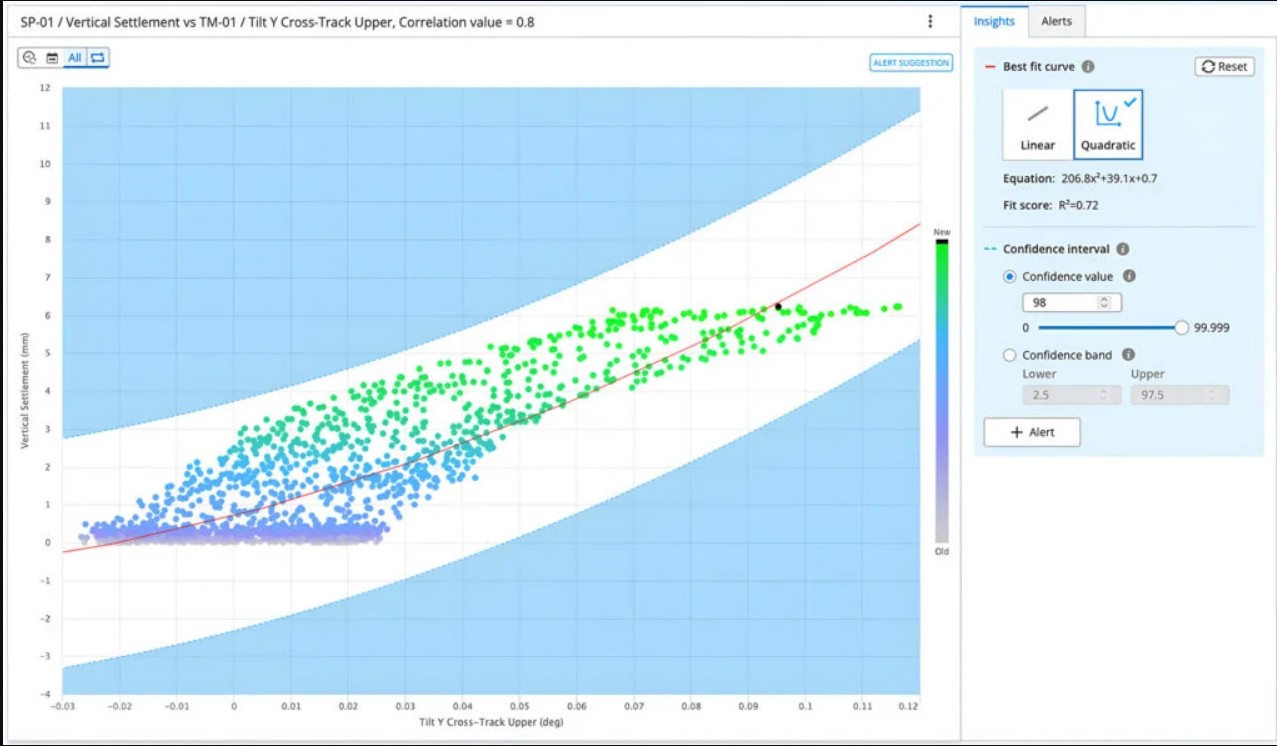
Artificial intelligence could give infrastructure engineers weeks of advance warning before structural problems become serious failures. Vahid Abdollahi, an applied AI scientist at Bentley Systems, explains that AI-powered analytics can help shift infrastructure monitoring from reactive alarms toward earlier, more predictive maintenance, reports Construction & Property.
Conventional monitoring systems typically issue alerts after sensor measurements cross predetermined thresholds. AI can instead examine information from multiple sensors simultaneously, recognize unusual relationships, and potentially identify dangerous conditions four to six weeks earlier. The process depends on trustworthy sensor data. Systems must first detect faulty, drifting, or abnormal readings so that equipment problems are not mistaken for genuine structural changes.
Techniques such as Seasonal-Trend Decomposition can separate expected seasonal variations from unexplained behavior. AI can also compare data across different sensors to determine whether an anomaly reflects an instrumentation issue or a developing physical problem. Changes involving rainfall, ground pressure, and structural movement, for example, could reveal conditions associated with internal erosion before substantial movement occurs.
The approach is intended to support engineering judgment rather than replace it. Feature-importance analysis can explain which measurements influenced an AI-generated warning, giving engineers information they can examine before deciding what action to take. Generative AI can then translate complex sensor results into clearer, prioritized recommendations.
Bentley Systems integrates these capabilities through its iTwin IoT platform. By combining connected sensor information with AI-based analysis, the technology is designed to reduce excessive alarms and help teams concentrate on meaningful changes in infrastructure condition.
For infrastructure operators, earlier and more interpretable warnings could create additional time to inspect assets, investigate emerging risks, and plan maintenance before conditions become critical. The article presents AI as an analytical layer that can turn continuous monitoring data into practical engineering insight, potentially improving the safety, resilience, and service life of critical infrastructure.
