

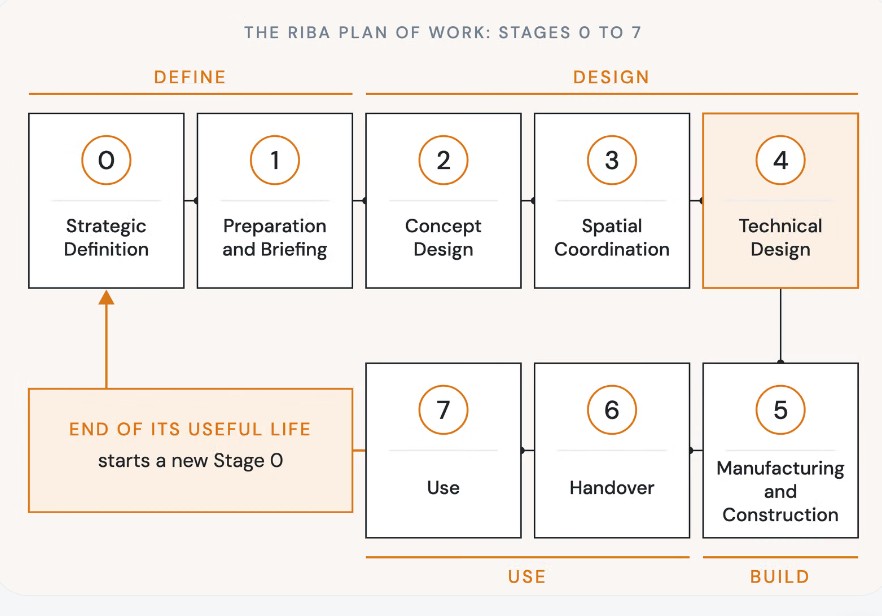
The Royal Institute of British Architects (RIBA) Plan of Work provides a structured framework for managing building projects from initial planning through construction and occupancy. Divided into eight stages, numbered 0 through 7, it defines responsibilities, deliverables, and approval requirements throughout the building lifecycle, says Pirros.
Stages 0 and 1 establish project objectives, feasibility, budgets, and responsibilities. Stage 2 develops the architectural concept, while Stage 3 coordinates architectural, structural, and building services designs. Planning applications are generally submitted after Stage 3.
Stage 4, Technical Design, is particularly demanding because architects must produce detailed construction drawings, specifications, schedules, and regulatory documentation. Stage 5 covers manufacturing and construction, followed by handover in Stage 6 and post-occupancy evaluation in Stage 7.
A recurring challenge during technical design is the unnecessary recreation of architectural details. Firms frequently redraw standard components, including window connections, roof junctions, and wall assemblies, because previously approved details are difficult to locate. Design decisions made during earlier stages may also become inconsistent with construction documentation.
Pirros addresses these inefficiencies through AI-powered detail management and quality control tools. Its platform searches existing architectural details, including Revit content, enabling teams to reuse established solutions instead of recreating them. Frequently used details can become standardized resources across projects.
Pirros Quality Management reviews drawings against organizational standards and identifies potential inconsistencies before documentation is issued.
The company’s Mira AI agent further automates repetitive Revit tasks, including replacing annotations, renumbering drawing details, and checking formatting consistency. Importantly, Mira presents proposed changes for user approval before modifying models.
The article emphasizes that effective project management requires consistent information across every stage. Feedback from construction and building operation should also inform future design standards.
By combining structured workflows with AI-assisted documentation, architecture firms can reduce repetitive work, improve quality control, and preserve valuable engineering knowledge across projects.
