

Manufacturers face a growing knowledge problem as experienced workers retire and take decades of practical expertise with them. Canvas Envision is using artificial intelligence to capture that knowledge and transform the way manufacturers create and deliver work instructions to shop-floor employees, tells Design News.
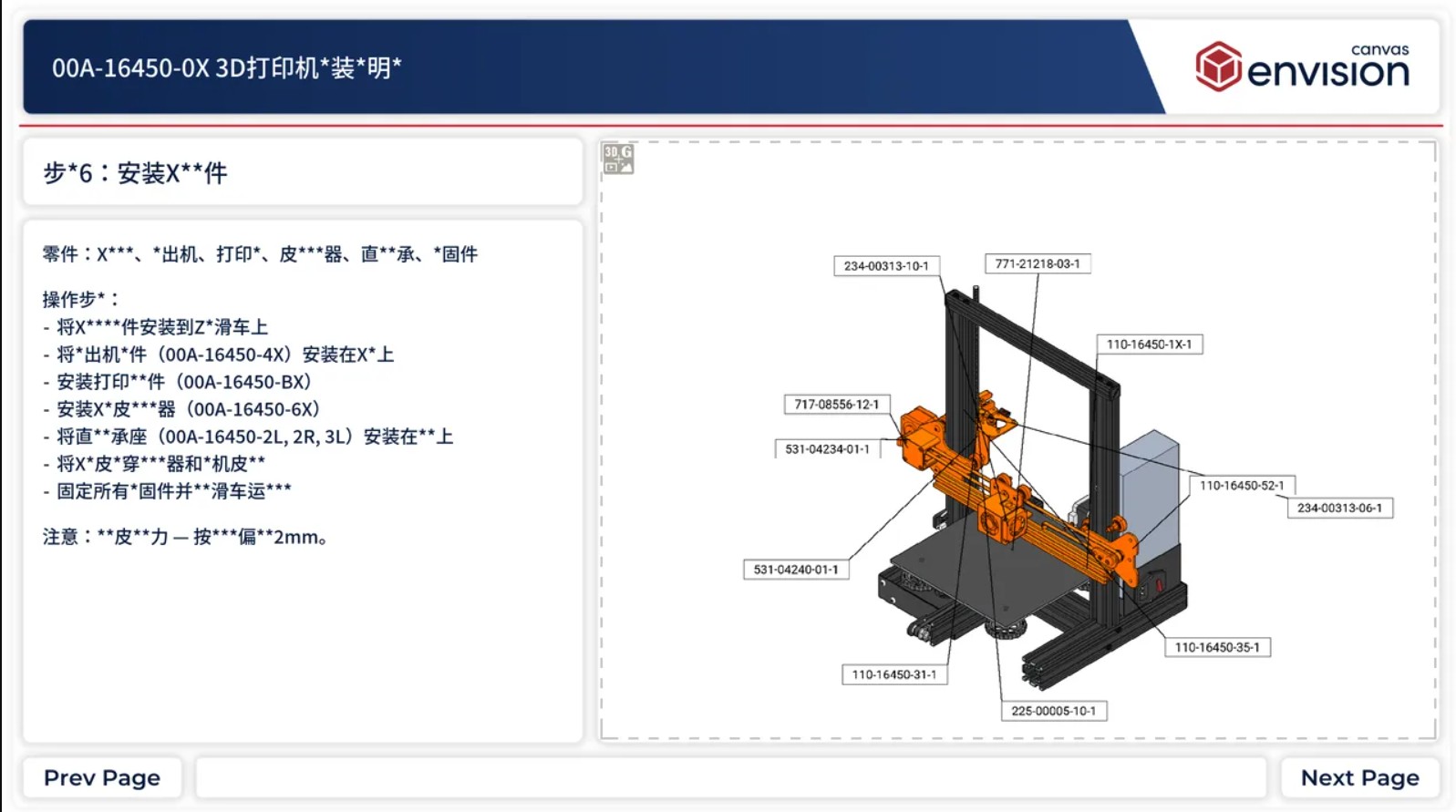
The platform packages 3D CAD data into digital work instructions that can combine models, videos, text, and images. Instructions can be delivered digitally in different languages and formats or converted into conventional documents when required.
AI reduces the effort involved in authoring these materials. It can propose assembly or service sequences and automatically create corresponding visuals by hiding, moving, exploding, labeling, or modifying components. Canvas Envision can also convert training videos into step-by-step instructions in less than 10 minutes. For lengthy technical documents, AI can locate information scattered across hundreds of pages and reorganize relevant procedures, safety information, and drawings.
The system uses a multi-agent AI architecture. One mode assists users with authoring tasks, while an agentic system can autonomously generate instructions from source material. An orchestration layer coordinates specialized AI agents.
Canvas Envision primarily targets low-volume, complex discrete manufacturing, where product configurations frequently change. Potential applications include industrial equipment, medical devices, automotive and aerospace components, and drones. Manufacturers can record experienced employees performing procedures and use AI to convert those recordings into instructions for new workers.
Otis has demonstrated the approach using a seven-minute procedure. Instead of completing classroom training before practicing on the factory floor, employees can follow a video while performing the task simultaneously.
Canvas Envision CEO Garth Coleman also sees digital instructions supporting both people and robots. Maintaining instructions for each could provide manufacturing operations with backup capability when automated equipment fails and human workers need to take over.
