
Artificial intelligence is moving deeper into semiconductor design, but its most practical role may be working alongside established electronic design automation tools rather than replacing them. Hardware FYI examines this shift through recent developments in AI-assisted EDA and examples of AI operating engineering software.
The discussion draws on an Asianometry analysis of AI’s evolving role in semiconductor chip design. Recent developments presented at Hot Chips 2026 suggest that AI models could increasingly operate through software harnesses connected to existing EDA tools. A harness allows an AI model to use engineering software, examine the results, and decide what action to take next.
This approach could be particularly useful in areas of chip development that provide clear and measurable feedback. Power, performance, and area, commonly known as PPA, is one example. An AI system could modify a design, evaluate the resulting PPA metrics, and repeatedly refine its decisions. Such feedback loops provide models with objective information about whether a design change improves or worsens the result.
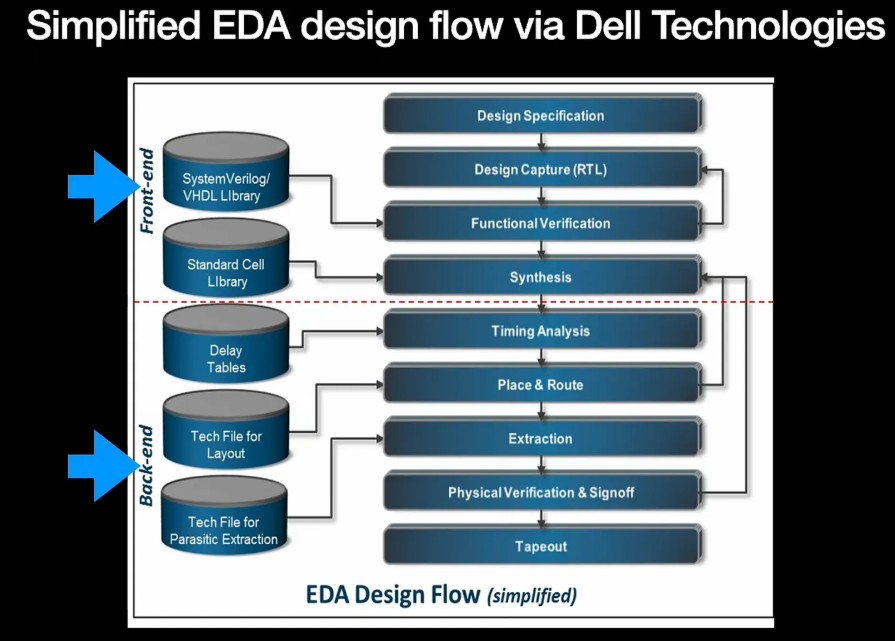
The article also points to Tiny Tapeout as an educational resource for understanding the complete EDA design process. Tapeout occurs when a finished chip design is sent to a foundry for fabrication. However, successful tapeout does not guarantee that the resulting silicon will work exactly as expected.
That uncertainty highlights an important limitation of AI-assisted engineering. A design can appear correct digitally, but physical manufacturing and testing may reveal problems that simulations or design tools failed to expose. Verification and debugging therefore remain critical.
Hardware FYI also highlights demonstrations involving AI using KiCad for printed circuit board component placement and trace routing and FreeCAD to create an automotive transmission concept. These examples suggest that AI’s near-term engineering value may come from operating specialized tools and responding to measurable results rather than autonomously replacing established design workflows.
