

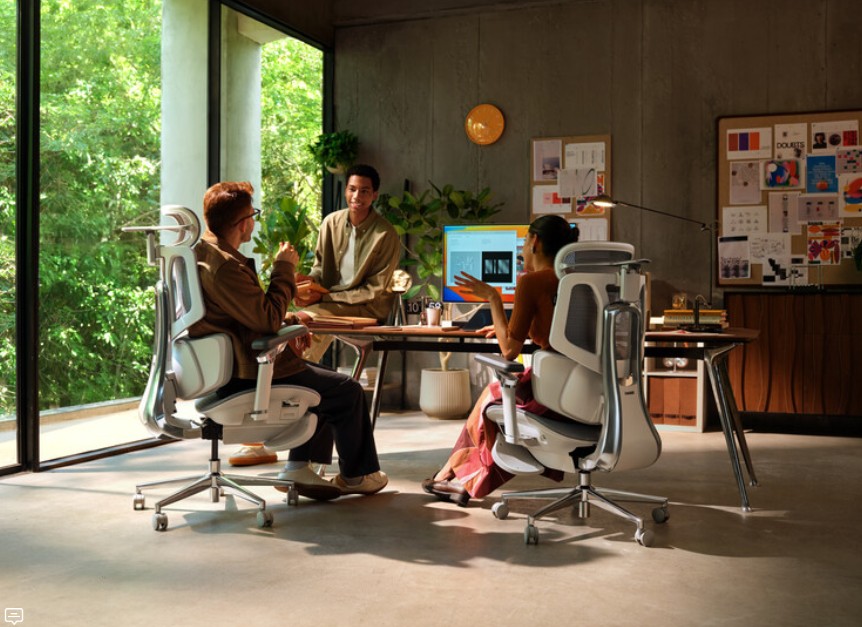
Office chairs have evolved alongside changes in workplace technology, moving from fixed wooden seating to adjustable ergonomic designs and now to furniture with embedded intelligence. ArchDaily examines this progression through the HBADA X7 Smart Ergonomic Chair, which uses sensors, processing, and motorized mechanisms to respond to changes in sitting posture.
Traditional ergonomic chairs depend heavily on users to adjust lumbar support, seat depth, recline resistance, armrests, and other settings. Responsive seating retains manual controls but adds technology that can make adjustments while a person moves. In the X7, sensors and a control chip work with a motorized three-zone lumbar system. Central and lateral support areas maintain contact with the lower back, while the mechanism moves forward or backward as posture changes.
The approach reflects a broader shift in architecture and product design. Building technologies such as ventilation, lighting controls, and occupancy sensors increasingly operate in the background. Smart furniture follows a similar direction by hiding processors and mechanisms within familiar objects.
The chair also addresses the variety of positions people adopt during modern work. Its adjustable headrest, multidirectional armrests, seat-depth controls, and 140-degree recline accommodate activities ranging from typing and reading to tablet use and video calls. However, responsive seating does not eliminate the need for movement. Prolonged sitting remains a concern, making sit-to-stand desks, circulation, and flexible workplace layouts important.
Material and thermal comfort are evolving as well. The X7 incorporates under-seat ventilation, graphene heating, and a massage system alongside its ergonomic features.
The larger design shift is from static furniture toward responsive objects. Earlier chair innovations were visible through wheels, levers, springs, and mesh. Newer designs move much of that complexity inside the product, allowing furniture to adapt more actively to users while keeping technology largely out of sight.
