

Artificial intelligence could potentially improve interoperability between computer-aided design (CAD) systems, but fundamental differences in software architecture remain significant obstacles. In a discussion published by WorldCAD Access, Mike McLeod, senior editor of Machine Design, and CAD industry analyst Ralph Grabowski examine whether AI could enable universal CAD file translation.
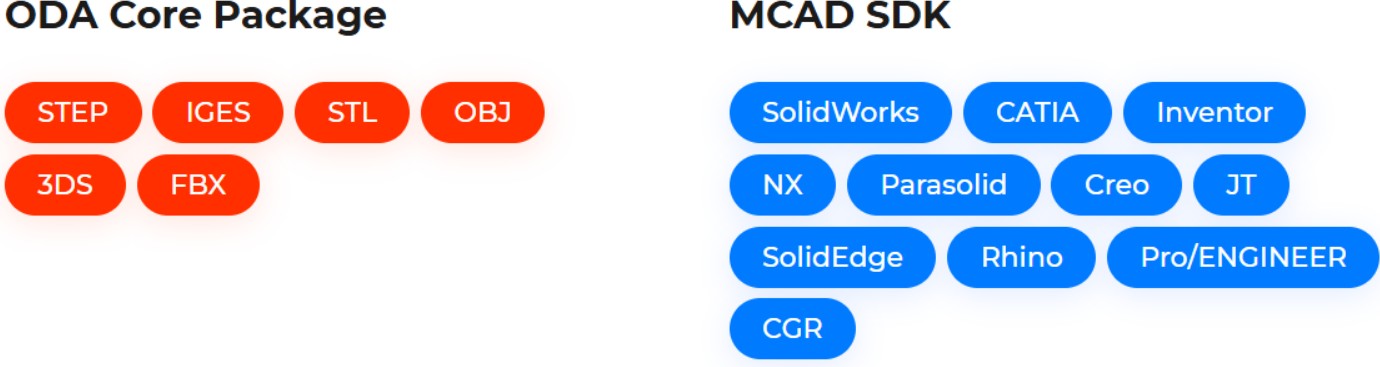
McLeod proposes using the Open Design Alliance’s mechanical CAD software development kit (MCAD SDK) to expose proprietary file structures for AI training. By creating identical assemblies across CAD platforms, including CATIA, NX, SolidWorks, Creo, and Inventor, developers could train models to recognize relationships between features, parameters, constraints, materials, and modeling histories.
With sufficient training data, such models might translate complex designs while preserving information often lost during conventional STEP or IGES conversions.
However, Grabowski identifies several technical barriers. CAD systems do not necessarily support identical geometric entities or modeling operations. For example, early versions of Pro/Engineer lacked a dedicated circle entity, requiring designers to construct circles using two arcs. AutoCAD’s variable-width polylines present another compatibility challenge.
Differences in layer limitations and geometric modeling kernels further complicate translation. Siemens Parasolid, Dassault CGM, and PTC Granite represent geometry differently, making direct conversion difficult.
These incompatibilities also affect software products owned by the same companies. SolidWorks and CATIA use different kernels, as do Onshape and Creo, creating interoperability challenges despite common corporate ownership.
Intellectual property protection introduces additional concerns. Training AI models on proprietary engineering files could expose confidential designs to external technology providers.
Grabowski argues that AI alone cannot resolve these structural differences, particularly when proprietary formats reinforce vendor dependence.
The discussion also considers open-source alternatives such as FreeCAD, although achieving broader functionality remains challenging.
Ultimately, reliable CAD interoperability requires more than intelligent file conversion. Differences in geometric representation, software architecture, and commercial interests continue to complicate the exchange of complete engineering design information.
