

Connected vehicles are becoming increasingly vulnerable to cyberattacks as automakers integrate cameras, microphones, GPS sensors, and cloud-connected software. An IEEE Spectrum article examines emerging cybersecurity threats and the technologies engineers are developing to protect vehicles and consumer data.
According to Germany’s Center for Automotive Management, cyberattacks caused more than $20 billion in automotive industry damage by 2025, approximately 20 times the amount recorded in 2022. These growing risks have prompted researchers to explore AI-driven security systems, improved chip protection, and stronger encryption.
At the Embedded Security in Cars (escar) conference in Bonn, Germany, experts discussed adaptive AI systems capable of monitoring vehicle communications while minimizing computational demands. Olaf Landsiedel of Hamburg University of Technology described lightweight monitoring systems that activate sophisticated AI models when suspicious activity appears.
His team developed ThinkingViT, a deep-learning model that reduces computational requirements through progressive inference. Such approaches could help vehicles maintain cybersecurity without continuously consuming substantial processing power.
Detroit-based Block Harbor is applying multilayered security strategies and AI-assisted vulnerability scanning. Meanwhile, Norwegian transport operator Ruter is developing firewalls after discovering potential remote-access vulnerabilities in its electric bus fleet.
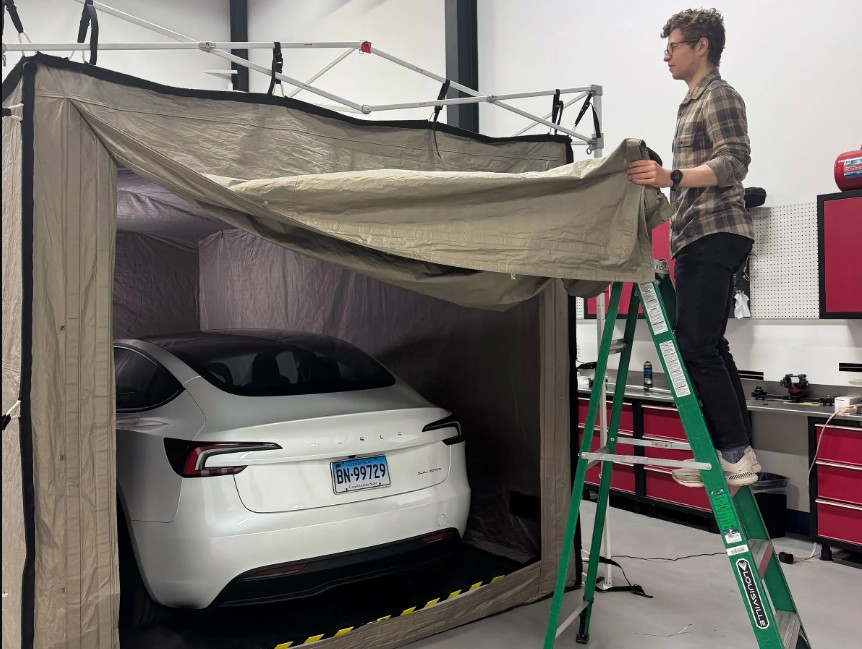
Data privacy presents another challenge. Researchers at Northeastern University examined network traffic from 19 automotive brands using a Faraday tent. They discovered vehicles transmitting information to major technology companies, while companion applications shared personal identifiers and location data.
Regulatory scrutiny is increasing. General Motors agreed to a $220 million settlement in October 2026 over allegations involving unauthorized sales of driving and location information.
The article also highlights U.S. restrictions on Chinese and Russian connected-vehicle technologies and research into post-quantum cryptography.
Experts emphasize that protecting connected vehicles requires comprehensive security across onboard electronics, cloud platforms, charging infrastructure, and supply chains. AI-assisted monitoring, secure communications, and responsible data management will become essential as vehicles grow increasingly connected and software-dependent.
