

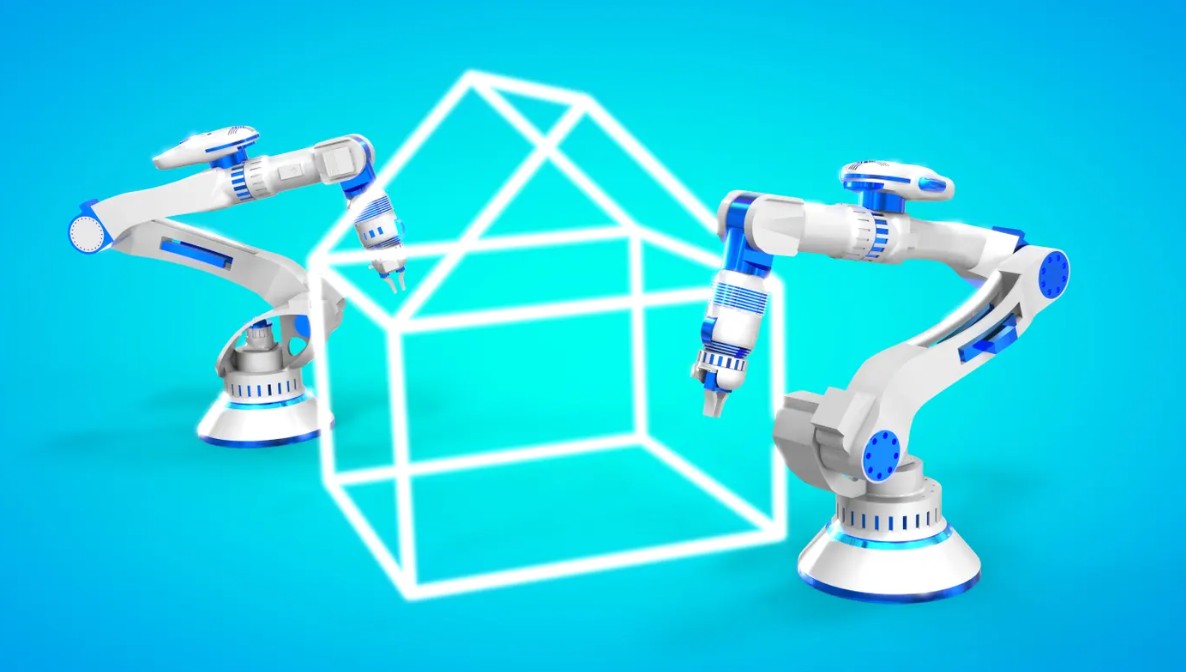
Artificial intelligence and robotics could transform the construction industry by replacing fragmented building processes with automated manufacturing systems. At MIT’s Minds in Motion summit, industry experts discussed a future in which autonomous robots design, manufacture, and assemble buildings with minimal human intervention, tells Forbes.com.
The discussion featured Vikas Enti of Reframe Systems, Michael Santora of Logic, and Mauricio Pereira of Industrial Automata, moderated by Frazer Anderson of Link Ventures.
Enti argued that simply introducing robots onto conventional construction sites would not deliver maximum efficiency. Instead, construction processes should move into controlled factory environments, where robots can perform multiple operations simultaneously.
Reframe Systems has developed a technology platform called pixels to parts, which combines industrial robotic arms with advanced vision systems. The approach supports mass customization while allowing robots to switch between framing walls, assembling ceilings, installing sheathing, and potentially handling electrical and plumbing components.
Pereira highlighted the economic advantages of automation, particularly its potential to reduce insurance, liability, and labor-related expenses. He suggested that advances in robotic foundation models and physical AI could enable autonomous machines to operate in unpredictable construction environments.
Supply chain integration represents another opportunity. Santora emphasized the importance of connecting manufacturing, transportation, storage, and assembly through unified robotic systems. Such integration could improve material tracking, operational coordination, and data collection for training future AI models.
The panelists also envisioned AI agents independently generating building designs, checking compliance with construction codes, and directing robotic assembly.
Enti predicted that factory-based automation could eventually reduce construction timelines from several years to days, enabling homes to be manufactured according to customer demand rather than speculative development.
Although these predictions remain ambitious, the discussion illustrates the potential convergence of AI, robotics, and industrialized construction. Together, these technologies could improve productivity, reduce housing costs, and fundamentally change building design and delivery.
