

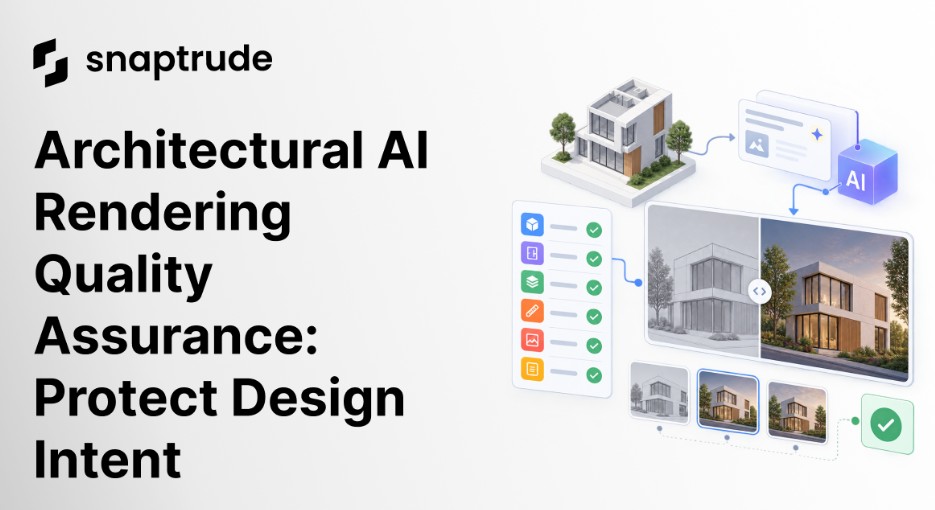
AI-generated architectural renderings can produce visually impressive images, but their accuracy remains a concern. A polished visualization may introduce nonexistent doors, remove columns, distort proportions, or alter facade details. Snaptrude emphasizes that quality assurance must distinguish visual appeal from architectural fidelity before images reach clients.
The company recommends establishing a clear reference before generating images. Architects should record the approved model revision, camera position, crop, visible elements, and supporting references. This baseline allows reviewers to identify unintended changes and maintain design consistency throughout subsequent iterations.
A constraint brief should separate editable features, such as lighting, landscaping, atmosphere, and material character, from protected elements, including massing, openings, proportions, circulation, and camera position. Changing one category at a time makes errors easier to identify and correct.
Snaptrude outlines several verification methods, including side-by-side comparisons, difference overlays, annotated checklists, model measurement checks, and multiple-reviewer approvals. Every generated image should undergo visual comparison with its source. Images supporting contractual, regulatory, financial, or public decisions require additional scrutiny.
Reviewers should reject renderings that alter protected geometry, misrepresent accessibility or safety, obscure material decisions, or lack traceability to an approved model. Rather than relying on captions to explain inaccuracies, teams should regenerate misleading images or restrict their intended use.
Snaptrude’s browser-based platform connects live BIM modeling, visualization, and presentation workflows, helping teams retain design context during reviews. However, the company acknowledges that its software does not guarantee automatic detection of every AI-generated inconsistency. Human oversight remains essential.
The article also distinguishes conceptual imagery from technical communication. Mood studies may permit creative interpretation, while design-development reviews require stricter geometric accuracy.
For architects and AEC professionals, the central lesson is that AI rendering requires documented constraints, traceable revisions, and purpose-specific approvals. These safeguards help teams explore visual possibilities without compromising design integrity or communicating inaccurate information to project stakeholders.
