

The next wave of product innovation may depend less on impressive individual hardware and more on the intelligence connecting multiple machines. Forbes contributor Michael Ashley argues that AI is shifting product value toward an intelligence layer that allows devices to sense, coordinate, and act together. Hardware remains important, but shared intelligence can make relatively simple machines significantly more capable.
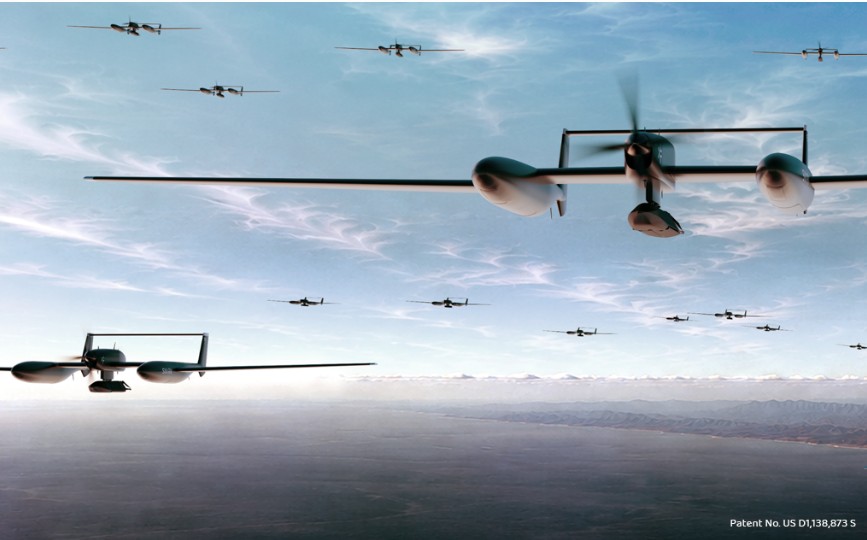
Swarm Aero illustrates this shift with Gamera, its large uncrewed aircraft, and Legion, its command-and-control software. Traditionally, deploying more military aircraft required more pilots. Legion changes that relationship by enabling one operator or a small team to oversee multiple autonomous systems simultaneously. The product, in this case, becomes the coordinated swarm rather than an individual aircraft.
A similar idea is emerging in robotics through the one brain, multiple forms model. Instead of developing separate intelligence for every robot configuration, a common underlying AI architecture could support different physical platforms. Google DeepMind’s Gemini Robotics 2 demonstrates the potential for different robots to share semantic understanding and hand tasks between machines suited to different environments.
Healthcare provides another example. Teton uses unobtrusive sensors and AI to understand activity in care environments, helping staff identify who needs assistance and what has changed. Its longer-term goal is to coordinate people and machines so healthcare capacity is less tightly constrained by workforce availability.
The implications are particularly significant for defense. Advanced fighter aircraft have become extraordinarily expensive, making continual improvements to individual platforms increasingly difficult to sustain. Networks of autonomous systems could offer another approach, combining less expensive hardware with sophisticated coordination software to produce capabilities that individual machines cannot achieve alone.
The larger engineering shift is from designing intelligence into individual products to designing systems that share intelligence. Future competitive advantage may therefore come not simply from building a better machine but from enabling many machines, sensors, and people to operate as one coordinated system.
