

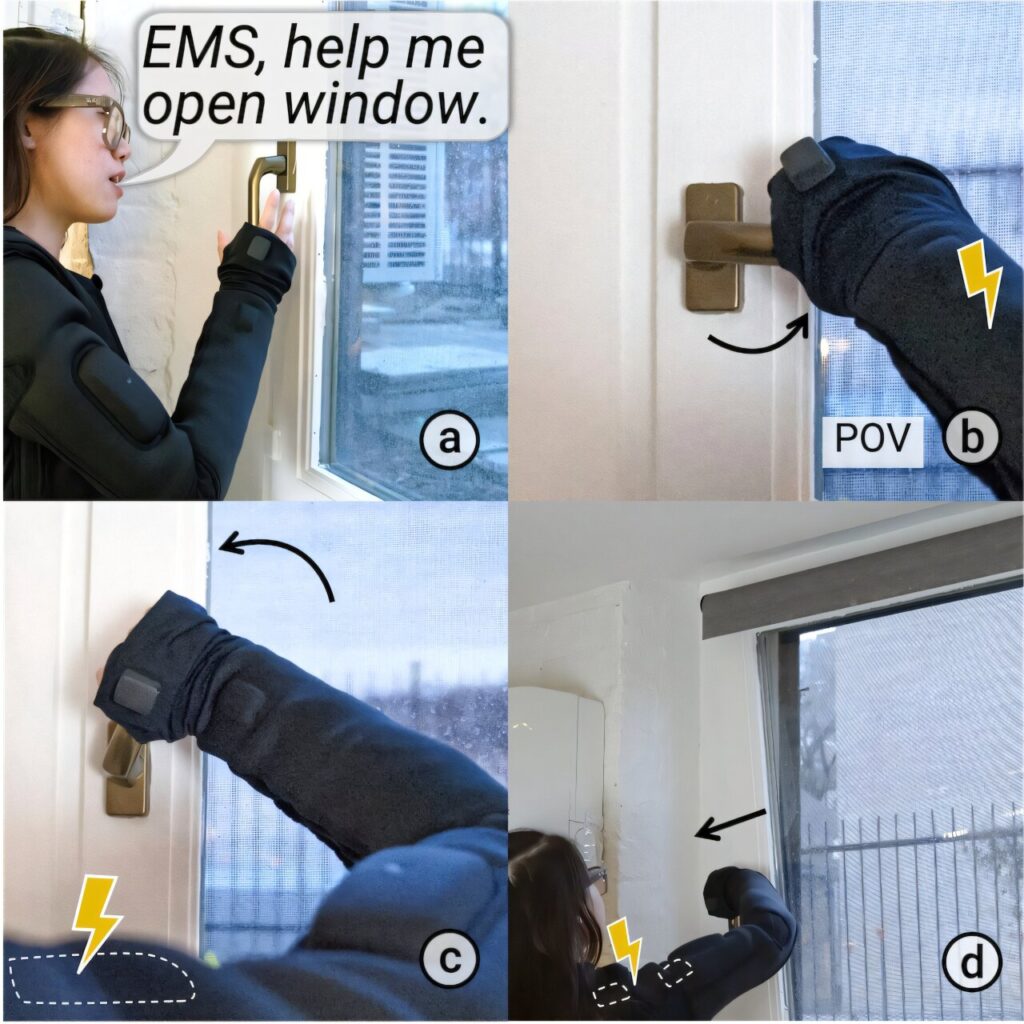
A new class of human–computer interaction is emerging where artificial intelligence does not just suggest actions but physically guides them. Researchers at the University of Chicago have developed a system that combines AI with electrical muscle stimulation (EMS), allowing users to feel their muscles gently steer them through unfamiliar tasks in real time, tells Tech Xplore.
Traditional EMS has long been used in rehabilitation and skill training, triggering muscle movements through electrical signals. However, these systems have been limited to pre-programmed actions, functioning only in tightly controlled scenarios. They lack the flexibility to adapt when conditions change or when a task falls outside predefined instructions.
The new approach introduces what researchers describe as embodied AI. Instead of following fixed scripts, the system integrates multimodal intelligence, combining visual input, spatial awareness, and body positioning to interpret the user’s environment. Using this contextual understanding, it generates precise muscle cues tailored to the situation. For example, it can guide a user to open an unfamiliar window mechanism or manipulate an object they have never handled before, effectively acting as an invisible instructor.
This shift from task-specific programming to adaptive reasoning marks a significant advance. The system can distinguish between similar objects requiring different actions, avoiding the rigid responses that limited earlier EMS tools. By dynamically adjusting to context, it broadens the scope of physical assistance beyond niche demonstrations to everyday activities.
Potential applications span rehabilitation, industrial training, accessibility, and consumer technology. Users could learn complex manual skills faster or receive assistance in performing tasks safely and efficiently. Early demonstrations show that participants can successfully complete unfamiliar movements with the system’s guidance.
At the same time, the researchers emphasize control and safety. Users remain in charge, with the ability to interrupt or override the system at any moment. Ethical concerns, including the risk of incorrect guidance, remain an open area of discussion as the technology evolves.
By merging perception, reasoning, and physical feedback, this work reframes AI as something that can directly shape human motion, not just decision-making.
