

Artificial intelligence is accelerating industrial design, but its real value may depend less on generating concepts and more on what happens when those concepts reach engineering. Leo AI argues that the design-to-engineering handoff remains a major source of rework because designers and engineers describe products differently.
Industrial design typically moves through exploration, communication, refinement, and handoff. AI has significantly accelerated the first two stages, allowing designers to generate many concepts and realistic images quickly. Yet those gains can disappear when engineers must convert visually compelling ideas into manufacturable products.
The article divides AI tools into four categories. Image generators support early visualization but provide no measurable geometry. Text-to-3D systems create meshes useful for reviews and rough prototypes, but these lack feature histories and editable engineering surfaces. Generative design tools optimize forms around loads, constraints, weight, and stiffness, making them better suited to structurally driven components. Engineering-specific assistants work with existing parts, standards, assemblies, and company records to help translate concepts into buildable designs.
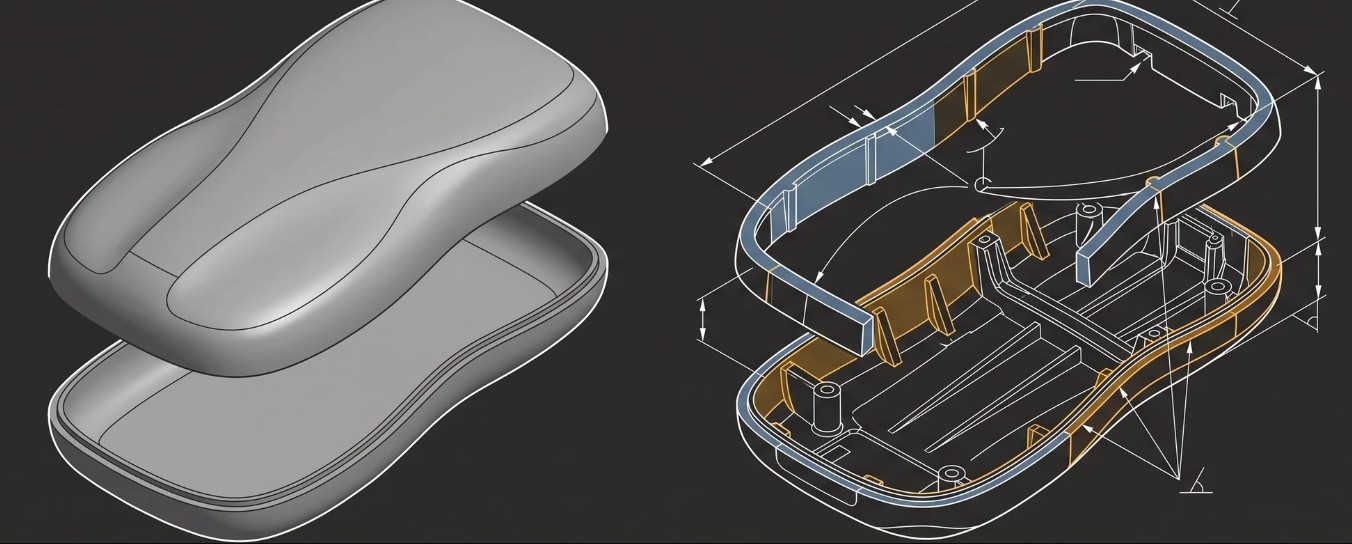
During handoff, critical information can disappear. Surface continuity, parting lines, seams, draft angles, wall thicknesses, internal structures, and the reasoning behind design decisions may not transfer cleanly. Faster AI-driven concept generation can amplify this problem by sending more untested assumptions downstream.
Leo AI positions Leo as a bridge between concept development and engineering. Its concept visualization and 2D-to-3D capabilities are intended to move ideas closer to usable geometry. The system can also search engineering knowledge stored across PDM, PLM, ERP, local directories, and network systems.
The article recommends evaluating AI with real completed projects rather than polished demonstrations. Teams should measure engineering rework, time to the first usable model, preservation of design intent, and access to supporting sources. The most useful AI tool is therefore not necessarily the one that generates concepts fastest, but the one that reduces downstream engineering effort.
