

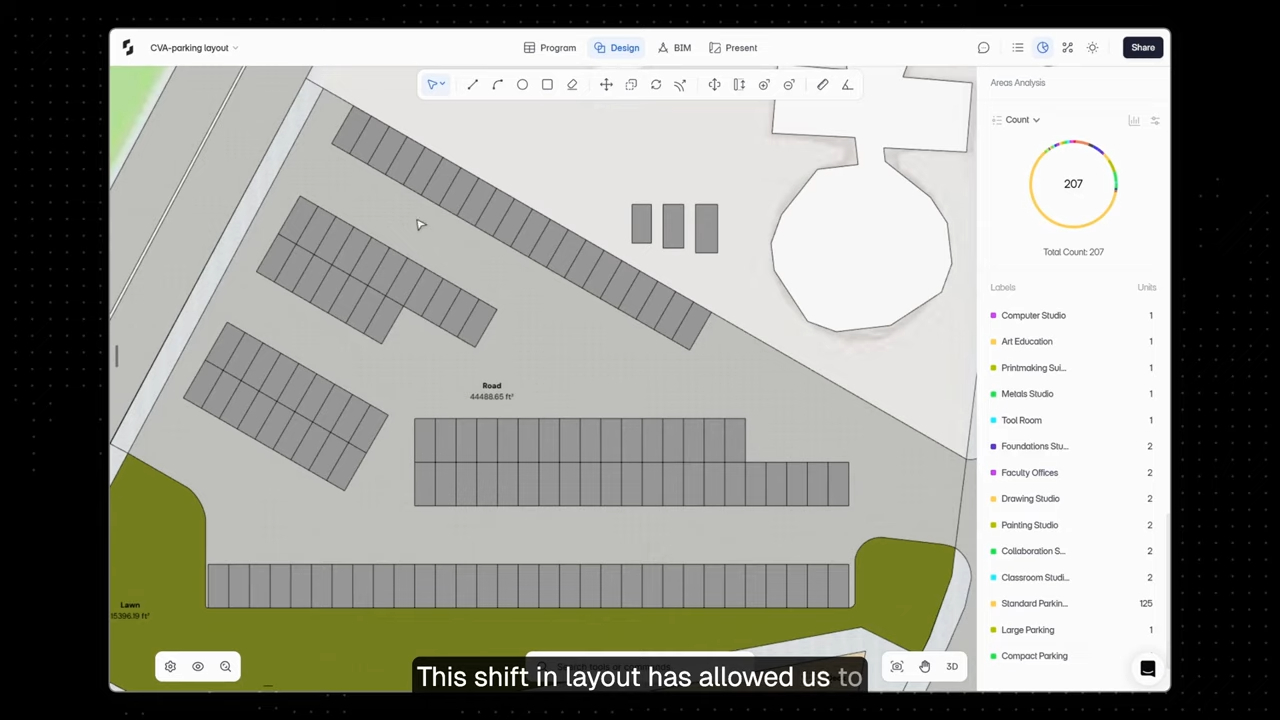
Airport apron planning requires more than fitting aircraft silhouettes into available space. Snaptrude outlines a five-stage workflow that connects aircraft mix, parking geometry, circulation, and operational validation to help planners eliminate impractical layouts before investing in detailed simulation.
The process begins by defining the aircraft mix as multiple operating scenarios rather than designing around the largest aircraft alone. Planners should document aircraft dimensions, maneuvering methods, arrival and departure directions, service requirements, flexible-stand rules, and combinations that may occur simultaneously. Aircraft data should come from verified manufacturer or regulatory sources.
Next, planners convert aircraft dimensions into layered stand geometry. The aircraft body provides a physical reference, while separate envelopes represent parking clearances, movement paths, service areas, and obstacle buffers. Keeping these elements distinct helps teams understand why a proposed stand succeeds or fails.
Designers can then generate alternatives by varying stand orientation, centerlines, aircraft assignments, taxilane arrangements, and shared-use configurations. Geometry serves as an early filter for identifying clearance violations, blocked stands, path conflicts, and movements dependent on neighboring aircraft.
A geometrically valid arrangement, however, is not proof that the apron can operate safely. Surviving options must undergo further validation covering swept paths, pushback, towing, jet blast, service vehicles, passenger movement, emergency access, weather operations, and interactions between adjacent stands and taxilanes.
Flexible stands require particular attention because one position may accommodate a large aircraft or several smaller aircraft under different operating states. Exclusion rules and allowable configurations must therefore be explicit.
Snaptrude can support early option development through browser-based 3D modeling, parametric tools, BIM capabilities, collaboration, presentations, and common design exports. The company does not claim that the platform automatically performs airport-specific compliance or swept-path validation. Those responsibilities remain with qualified airport planners using applicable standards and simulation tools.
