

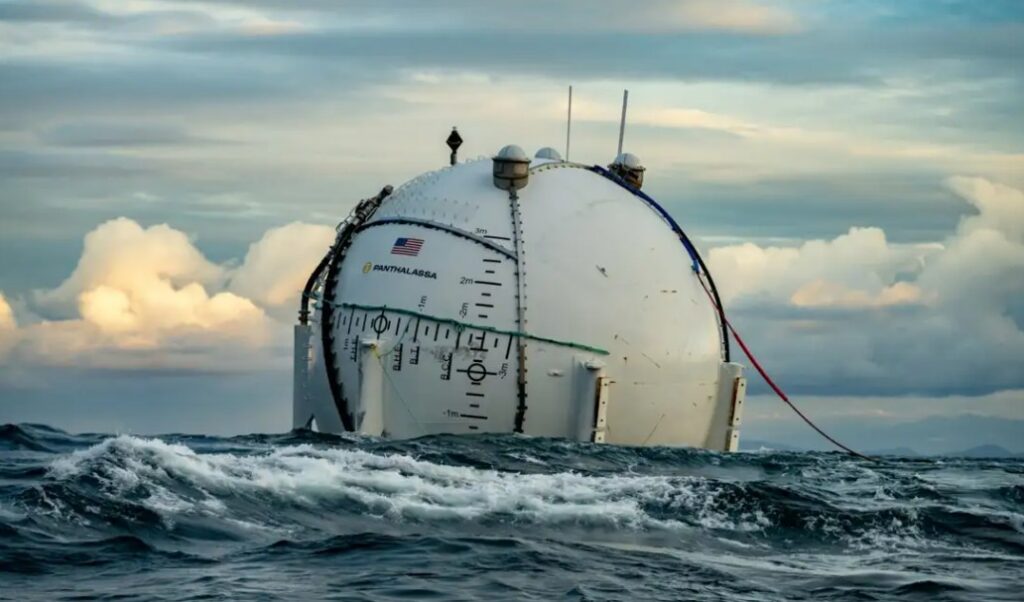
The explosive growth of artificial intelligence is pushing global energy infrastructure toward a breaking point, and some engineers now believe the future of computing may lie at sea. A recent article in New Scientist examines a proposal to build floating offshore data centers powered by ocean energy as a way to meet AI’s escalating electricity demands.
Modern AI systems require enormous computing resources, and the data centers supporting them already consume vast quantities of electricity. As companies race to expand AI capabilities, concerns are growing over power shortages, overheating infrastructure, water consumption, and rising carbon emissions. The article focuses on one startup, Panthalassa, which proposes moving AI infrastructure offshore rather than continuing to expand land-based facilities.
Panthalassa’s concept involves large floating platforms equipped with onboard data centers powered primarily by wave energy. The surrounding ocean would also provide natural cooling for the computing hardware, reducing the need for energy-intensive cooling systems that conventional data centers rely on. According to the article, the company believes floating facilities could bypass many of the constraints limiting terrestrial AI expansion, including land scarcity, grid congestion, and freshwater demands.
The proposal also includes transmitting processed data back to land through satellite communications instead of relying entirely on undersea fiber connections. Advocates argue that placing data centers directly beside offshore renewable energy sources could reduce transmission losses and improve energy efficiency.
However, the article emphasizes that significant engineering challenges remain unresolved. Offshore computing systems would need to survive corrosive saltwater environments, severe storms, difficult maintenance conditions, and long-term reliability issues. Some experts quoted in the article question whether the economics of floating AI infrastructure can realistically compete with increasingly efficient land-based data centers.
Despite skepticism, the article presents offshore computing as part of a larger shift in thinking about AI infrastructure. Rather than treating energy and cooling as secondary operational concerns, companies are beginning to view them as central technological bottlenecks that may reshape where and how future computing systems are built.
