

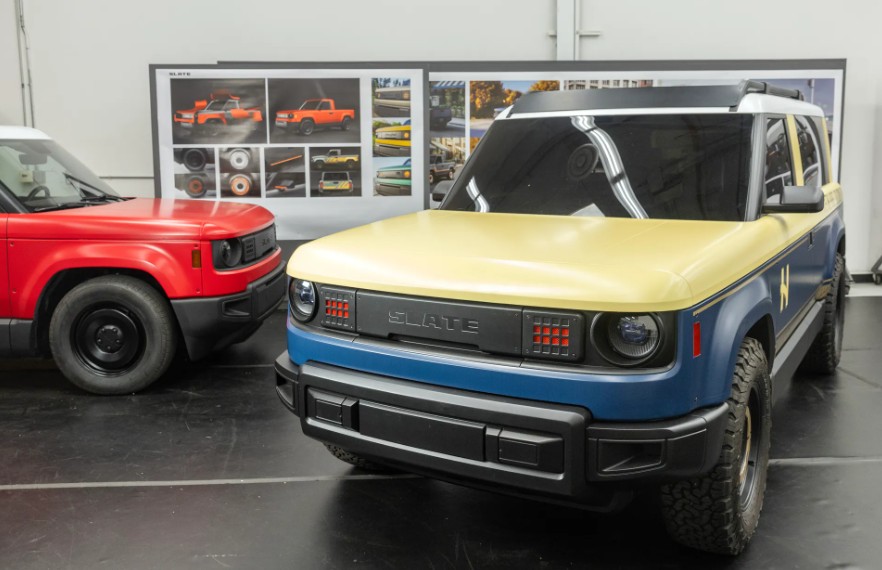
Slate Auto’s new electric pickup has drawn attention for its starting price of less than $25,000, making it America’s most affordable electric truck. While its minimalist design helps keep costs low, the biggest factor behind its price is the use of a lithium iron phosphate (LFP) battery. Although the battery chemistry was originally developed in the United States, China spent years refining the technology and building an extensive manufacturing ecosystem that now dominates global production. As a result, the latest wave of affordable American EVs is increasingly dependent on Chinese battery expertise, tells Wired.com (full article available to subscribers).
The article explains that this outcome is partly the result of changing U.S. policy. The 2022 Inflation Reduction Act encouraged automakers to source batteries and critical minerals from the United States and allied nations in exchange for federal tax credits. Those rules discouraged the use of Chinese battery materials, prompting companies such as Slate to pursue alternative strategies. However, the subsequent repeal of those tax credits under a Republican-led Congress removed the sourcing requirements, allowing manufacturers to prioritize lower-cost battery technologies regardless of their origins.
LFP batteries offer several advantages over conventional nickel manganese cobalt batteries. They are less expensive, more durable, and inherently safer, although they typically provide lower energy density and shorter driving range. Chinese companies, particularly CATL and BYD, invested heavily in overcoming these tradeoffs and now account for nearly all global LFP cathode production. Slate plans to use batteries manufactured in Illinois by Gotion, the U.S. subsidiary of a Chinese company, illustrating how American production increasingly relies on Chinese technology and supply chains.
Other automakers, including Ford, General Motors, and Tesla, are also expanding their use of LFP batteries in lower-cost vehicle models. At the same time, several manufacturers are redirecting domestic LFP production toward stationary energy storage as EV demand softens. Industry leaders argue that long-term competitiveness will require more than policy changes. Stable regulations, sustained investment, expanded manufacturing capacity, and a skilled workforce are all needed to establish a resilient U.S. battery industry.
The article concludes that America can produce more affordable electric vehicles, but doing so currently depends on a technology ecosystem that China spent years developing. Unless the United States builds comparable capabilities across the battery supply chain, many future EVs assembled in America will continue to rely on Chinese innovation beneath the bodywork.
