

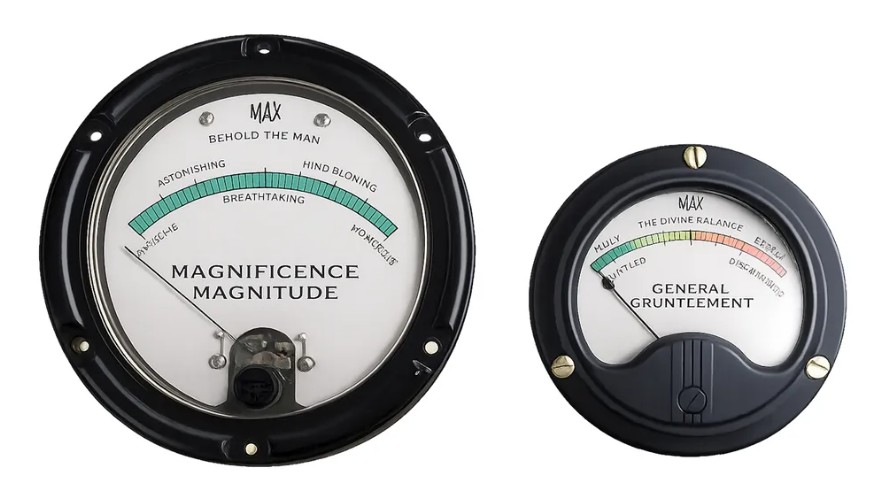
This Design News article revisits older display technologies, beginning with analog meters and their continued appeal in modern electronics projects. Although digital displays now dominate most devices, the author argues that old-school electromechanical displays still offer qualities that modern readouts often lack: visual immediacy, charm, and an intuitive way to understand system behavior.
The article opens with the author’s playful interest in time travel and early computing before turning to the broader history of engineering displays. He notes that analog electrical meters were already well established in the 19th century, long before practical electronic digital displays appeared in the mid-20th century. Their origins trace back to galvanometers developed in the 1820s by André-Marie Ampère and others to measure electric current. A major step came in 1888, when Edward Weston developed the practical permanent-magnet moving-coil meter movement that became the foundation for classic analog panel meters.
By the late 19th and early 20th centuries, analog meters were widely used as voltmeters, ammeters, ohmmeters, power meters, radio tuning meters, and industrial process gauges. The author describes them as early human–machine interfaces because they translated electrical and process conditions into readable physical movement.
The article’s central point is that analog meters are not merely nostalgic objects. Digital displays are excellent for precise numbers, but moving needles are often better at showing trends, fluctuations, peaks, instability, resonance, and relative change. In control rooms, operators could scan banks of meters and quickly notice needles pointing in unexpected directions, gaining a visual sense of system health without reading every value.
The author also highlights the renewed appeal of analog meters in retro and hobby projects. Modern versions can be customized, but antique meters offer a style and physical presence that contemporary components often lack. Refurbishing them can be difficult because old resistors, seals, faceplates, and contaminants require care. Yet once restored, they can be driven by microcontroller PWM outputs and add electromechanical character to modern designs.
