

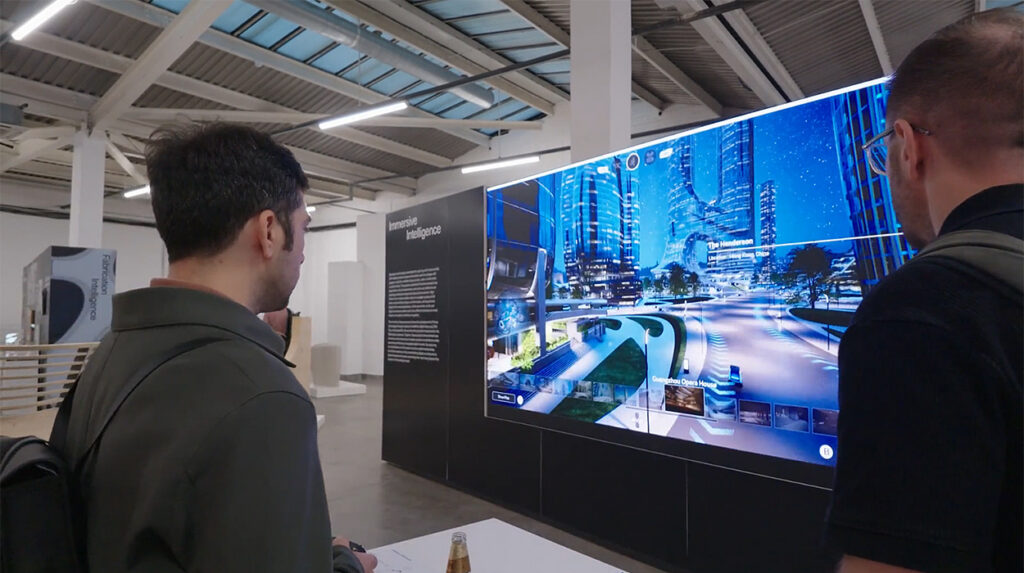
The London Creates festival brought architects, engineers, researchers, and students together to explore a future in which artificial intelligence works alongside established engineering principles. Centered on the theme Creative Intelligence, the event demonstrated that architectural innovation can come from combining emerging digital tools with ideas that have proved effective for centuries, tells this Construction & Property blog article.
A striking example came from Philippe Block, co-founder of Swiss startup Vaulted. Block showed how the geometry of Gothic cathedral vaults can inform modern concrete floor systems. By combining these structural principles with computational design, Vaulted says its approach can reduce concrete consumption by as much as 70% and steel use by 90%. The resulting components can also be reused, offering another route toward reducing construction’s environmental impact.
Held July 16–26, London Creates included AI exhibits, workshops, startup demonstrations, and presentations involving firms such as ZHA, Foster + Partners, and KPF. Speakers from Bentley Systems, Buro Happold, and KPF discussed AI’s expanding role in architecture and engineering. Their emphasis was not on replacing professionals, but on using AI to automate repetitive work, streamline design processes, and make sophisticated digital capabilities more accessible. Human judgment remains critical for checking engineering accuracy and maintaining safety.
Architect Mariana Cabugueira illustrated the practical impact for smaller practices. AI helps her six-person studio accelerate visualization and production, allowing it to compete with much larger firms while spending more time on design quality and creative decisions. Students at the festival similarly viewed AI as another professional skill to learn alongside existing digital tools.
London Creates ultimately presented architectural progress as a combination of old and new. Ancient structural intelligence, computational methods, AI, and human expertise can work together to create buildings that use fewer materials while improving efficiency, sustainability, and design possibilities.
