

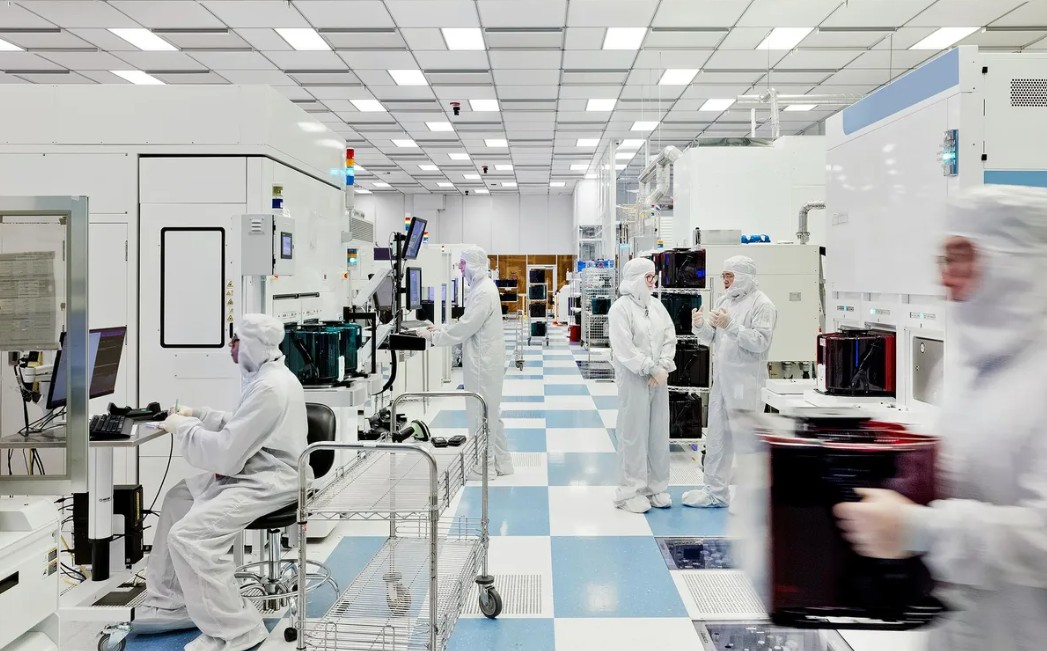
The U.S. Department of Commerce has finalized a CHIPS and Science Act research and development award of up to $1 billion for Anderon, a quantum foundry created by IBM in 2026. IBM will match the award with $1 billion in cash while contributing intellectual property, assets, and experienced workers. The goal is to establish a shared manufacturing service for IBM and other quantum hardware developers, tells IEEE Spectrum.
Based in Albany, New York, Anderon builds on IBM’s quantum wafer operations at Albany NanoTech. Its first quantum wafers are already moving through a production-scale 300-millimeter manufacturing line. IBM says its earlier shift from a 200-millimeter research fabrication facility to the Albany line doubled chip development speed and increased physical complexity 10-fold.
Anderon hopes to bring the foundry model familiar from conventional semiconductors to quantum computing. Customers could design processors while Anderon handles fabrication, avoiding the expense of constructing specialized factories. Potential users include fabless quantum processor developers, system builders, national laboratories, and companies operating smaller manual fabs. Rigetti Computing is already discussing possible collaboration.
The foundry plans to provide process design kits defining manufacturing rules while offering customization and protecting customer intellectual property. Automated fabrication could also improve consistency. Superconducting qubits depend on Josephson junctions, where small manufacturing variations can alter qubit frequencies and reduce yields. Anderon aims to control such variation through repeatable patterning, deposition, oxidation, and in-line testing.
The model still faces significant challenges. Superconducting circuits require specialized materials and processes, and Anderon has not detailed manufacturing support for alternatives such as trapped-ion or photonic qubits. It must also attract sustained demand beyond IBM and demonstrate that automation translates into higher-quality qubits.
Anderon expects to deliver wafers to outside customers by the end of 2026. Its success will ultimately depend not on manufacturing capacity alone, but on whether it can deliver increasingly complex quantum chips with predictable performance and competitive yields.
