

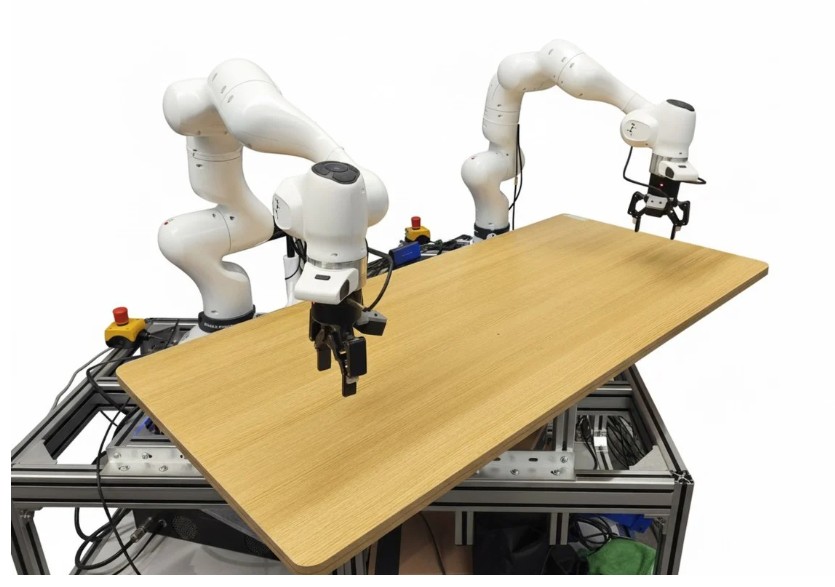
Chinese fintech giant Ant Group has taken a significant step in robotics by releasing its first open-source artificial intelligence models designed to give robots the capability to do more than show off programmed tricks. The move reflects a broader push into embodied intelligence—AI systems that perceive and act in physical environments instead of only existing in software—and aims to make robots more useful in everyday industrial and service tasks rather than limited to scripted moves like dancing or backflips, tells South China Morning Post.
Ant’s robotics unit, Ant Lingbo Technology (also known as Robbyant), has introduced its LingBot-VLA model, a vision-language-action system intended to serve as a sort of foundational “brain” for robots. The company says the model supports more scalable deployment across different types of hardware and real-world environments, addressing one of the key barriers to widespread robot adoption: autonomy. Robbyant’s CEO, Zhu Xing, has emphasized that reliable, cost-effective models that run on actual robotic systems are essential for the technology to move beyond controlled demonstrations and into productive work settings.
China already leads in the global rollout of industrial and humanoid robots, but much of the public focus has been on machines that perform programmed routines. These machines are impressive to watch but lack the generalized problem-solving that would let them adapt to new tasks or environments without human input. Experts and investors in the Chinese AI community see this limitation as a central challenge for the robotics sector, making foundational models such as LingBot-VLA critical for progress.
By open-sourcing its AI tools, Ant Group hopes to encourage wider experimentation and adoption, letting developers and companies build on its work rather than starting from scratch. The strategy also fits broader trends in open-source robotics, where shared software and hardware designs help reduce duplication of effort and accelerate innovation. Its success could influence how quickly robots move from labs into factories, warehouses, and commercial spaces where real-world intelligence and adaptability are required.
