

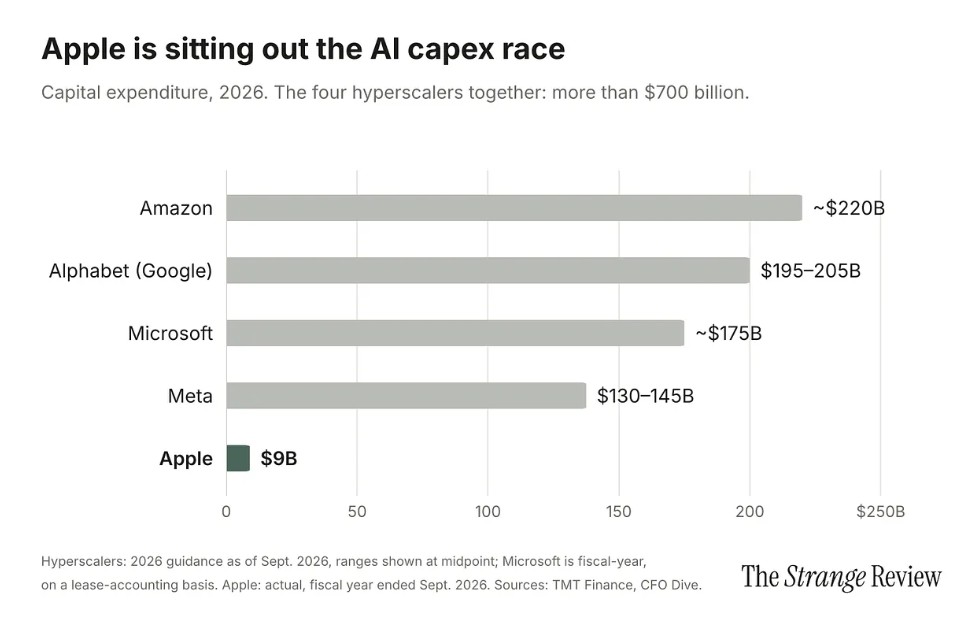
Apple’s artificial intelligence strategy may be taking a different direction from competitors investing heavily in cloud infrastructure. Rather than building massive data centers, the company appears focused on making its existing hardware capable of running increasingly sophisticated AI models locally.
According to Tara Tan, writing in The Strange Review, a reported Apple project called Harbor could transform Macs into private AI inference servers. Allegedly being developed under Apple’s Claris brand, Harbor would allow users to connect multiple Macs, run open-weight AI models, and process sensitive information without relying on external cloud services. Apple has not officially confirmed the project.
Recent technical demonstrations support this potential direction. In October 2026, Apple researchers demonstrated four Mac Studios running an 816-billion-parameter AI model at more than 36 tokens per second. Thunderbolt 5 connectivity enables multiple computers to share computational resources for demanding inference workloads.
This hardware-centered approach contrasts with investments by Alphabet, Amazon, Meta, and Microsoft, whose combined capital expenditures are projected to exceed $700 billion in 2026. Apple’s fiscal 2026 capital spending reportedly declined 29% to $9 billion.
The article also examines autonomous AI agents operating across multiple computers. Such agents could access established software environments, including Apple’s Xcode development tools, to perform complex tasks.
Adobe’s emerging Model Context Protocol integrations further illustrate this trend, potentially allowing AI agents to interact with Photoshop, Illustrator, Premiere, and After Effects.
Apple’s existing emphasis on on-device processing and Private Cloud Compute provides a foundation for managing personal information and application permissions.
Tan suggests that Apple’s opportunity lies in controlling the final stage of AI interactions, where models access personal context and perform authorized actions.
If successful, this strategy could transform personal computers into dedicated AI workstations, making local inference, privacy, and agent-based automation increasingly important hardware capabilities.
