

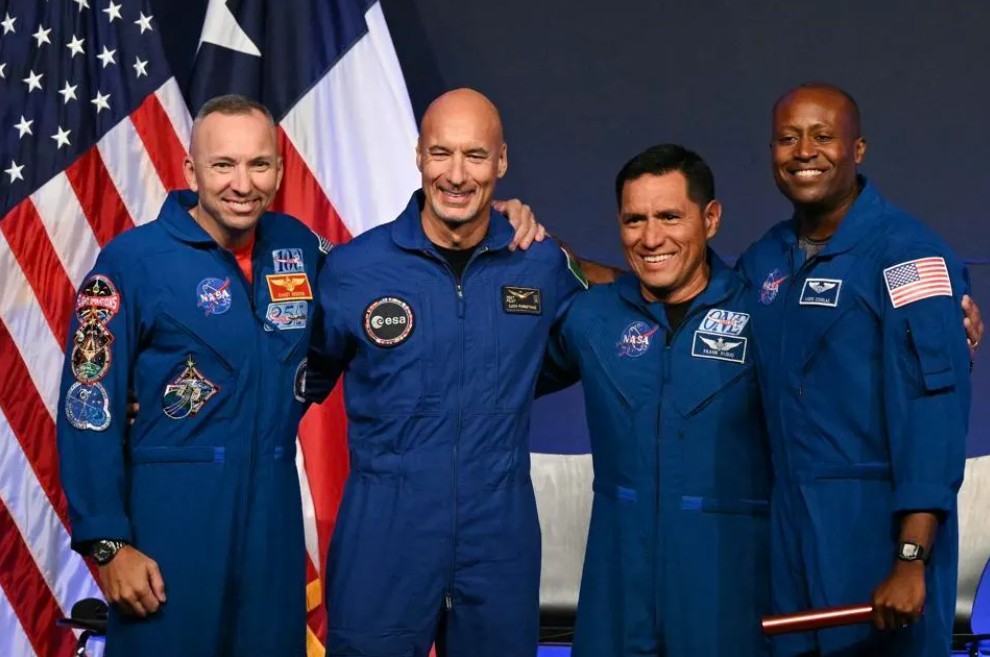
NASA has unveiled the crew for the Artemis III mission, the historic flight intended to return humans to the lunar surface for the first time since Apollo 17 in 1972. According to a Forbes.com report, the announcement marks a significant milestone not only for the Artemis program but also for international cooperation in space exploration, as one of the selected astronauts comes from Italy.
Artemis III is expected to become the first crewed lunar landing mission of the Artemis era. The mission will build on the achievements of Artemis I, an uncrewed test flight, and Artemis II, which will carry astronauts around the Moon without landing. Once launched, Artemis III will transport astronauts aboard NASA’s Orion spacecraft before transferring part of the crew to a lunar lander for operations on the Moon’s surface.
The inclusion of an Italian astronaut reflects the increasingly international nature of deep-space exploration. Through collaborations with the European Space Agency and other global partners, NASA is expanding participation in lunar missions beyond the United States. The selection highlights Europe’s growing role in the Artemis program, which includes contributions to spacecraft systems, lunar infrastructure, and scientific research.
The mission is expected to support a broad range of scientific objectives. Astronauts will conduct experiments, collect geological samples, and test technologies designed to support long-term human exploration. Unlike the Apollo missions, Artemis aims to establish a sustained presence around and on the Moon, laying the groundwork for future expeditions to Mars and beyond.
The crew announcement also underscores the strategic importance of the Artemis program. NASA views the Moon as a proving ground for technologies, operational procedures, and international partnerships needed for deep-space missions. The program is intended to foster scientific discovery while strengthening collaboration among participating nations.
As preparations continue, Artemis III remains one of the most anticipated space missions of the decade. The selection of a multinational crew reinforces the idea that the next chapter of lunar exploration will be shaped not by a single nation, but by a coalition of countries working together to expand humanity’s presence beyond Earth.
