

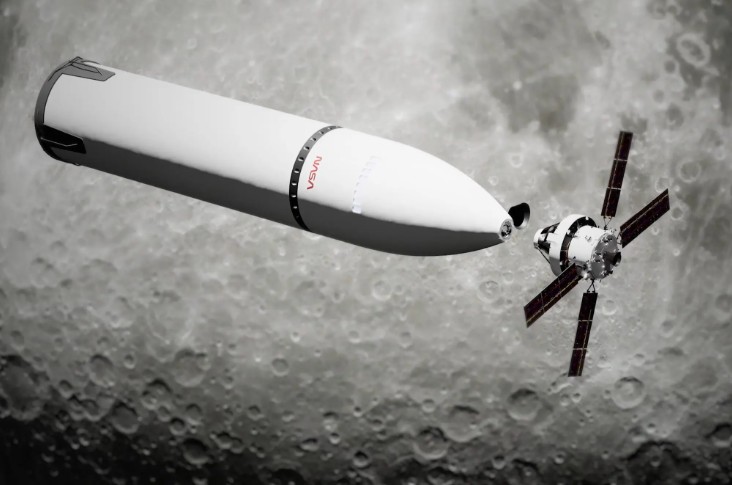
NASA has unveiled the crew and mission details for Artemis III, the next major step in the United States’ effort to return astronauts to the moon. While agency officials expressed confidence in the program’s progress, significant technical and scheduling challenges remain before the mission can fly and pave the way for a crewed lunar landing in 2028, tells The New York Times (full article available to subscribers).
Artemis III is designed as a complex demonstration mission involving NASA, SpaceX, and Blue Origin. The mission will require three separate spacecraft to launch and rendezvous in low-Earth orbit. Blue Origin’s Blue Moon lander will launch first and remain in orbit for up to 90 days. NASA’s Orion spacecraft, carrying the Artemis III crew, will then dock with Blue Moon so astronauts can test critical systems. A SpaceX Starship vehicle will launch afterward and dock with Orion, allowing NASA to gather operational data and validate procedures needed for future lunar missions. The entire mission is expected to last about two weeks.
Much of the program’s success depends on the readiness of commercial partners. SpaceX plans to use a version of Starship equipped with a docking port rather than a dedicated lunar lander. However, recent engine failures during a Starship test flight triggered a Federal Aviation Administration investigation, potentially affecting the company’s test schedule. Blue Origin faces its own challenges after an explosion during testing of its New Glenn rocket damaged the company’s only operational launchpad. Although executives remain optimistic, both companies must recover from these setbacks while continuing the development of their lunar systems.
NASA also has substantial work ahead. Engineers must repair and prepare the mobile launcher used by the Space Launch System rocket, complete the assembly of the Artemis III vehicle, conduct a wet dress rehearsal, install Orion’s upgraded heat shield, and train the mission crew.
Beyond Artemis III, both Blue Origin and SpaceX must demonstrate safe, uncrewed lunar landings. SpaceX additionally needs to prove orbital refueling, a capability essential for sending Starship to the moon. While NASA continues to target a crewed lunar landing in 2028, analysts caution that the schedule remains ambitious and that repeated delays could undermine public confidence in the Artemis program.
