

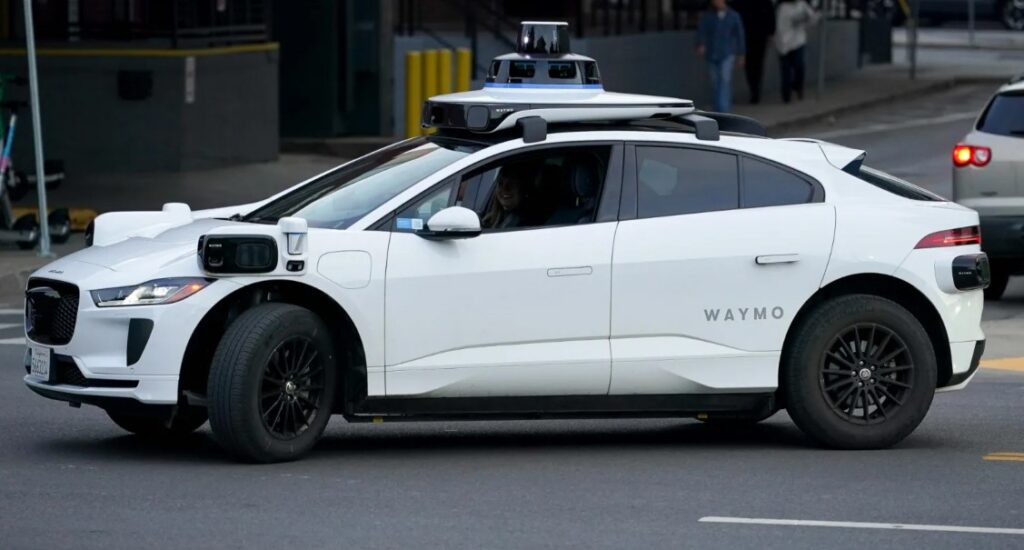
Autonomous vehicles have made significant advances in perceiving their surroundings, but rapidly changing lighting conditions remain a major challenge. Rain, snow, glare, and sudden flashes of bright light can interfere with computer vision systems, potentially causing vehicles to miss important details in their environment. Researchers at Penn State have developed a new sensor, called a photomemristor, that mimics the behavior of the human eye and could help autonomous systems navigate these situations more reliably, tells Popular Science.
The device, roughly the size of a grain of sand, takes inspiration from the way rods and cones in human eyes respond to changes in brightness. Human vision can quickly maintain awareness of surrounding objects when moving between dark and bright environments because rods and cones work together to adapt to varying light levels. The researchers sought to replicate this capability in machine vision systems.
Their photomemristor combines a gel-like conductive plastic, titanium oxide, and water. The titanium oxide captures incoming light and converts it into electrical signals, while the plastic changes its properties by absorbing or releasing water depending on light conditions. This dynamic response enables the sensor to adjust continuously to changes in illumination, much like biological vision.
To evaluate the technology, the team assembled the sensors into a 4 × 4 array and connected them to a neural network. During testing, the system was tasked with identifying an illuminated letter “F” against backgrounds that shifted between extremely bright and extremely dark conditions. After training, the system achieved 95% accuracy in recognizing the target under mixed-light environments, outperforming conventional machine vision approaches. It also adapted within seconds, whereas human eyes can require 20–30 minutes to fully adjust to major lighting changes.
Although the technology remains in an early stage, the researchers see broad potential applications. Future versions could improve the reliability of autonomous vehicles, assist humanoid robots operating in dynamic environments, and even contribute to advanced visual aids for people with impaired vision. The work demonstrates how biological principles can inspire new approaches to machine perception, particularly in environments where conventional computer vision struggles.
