

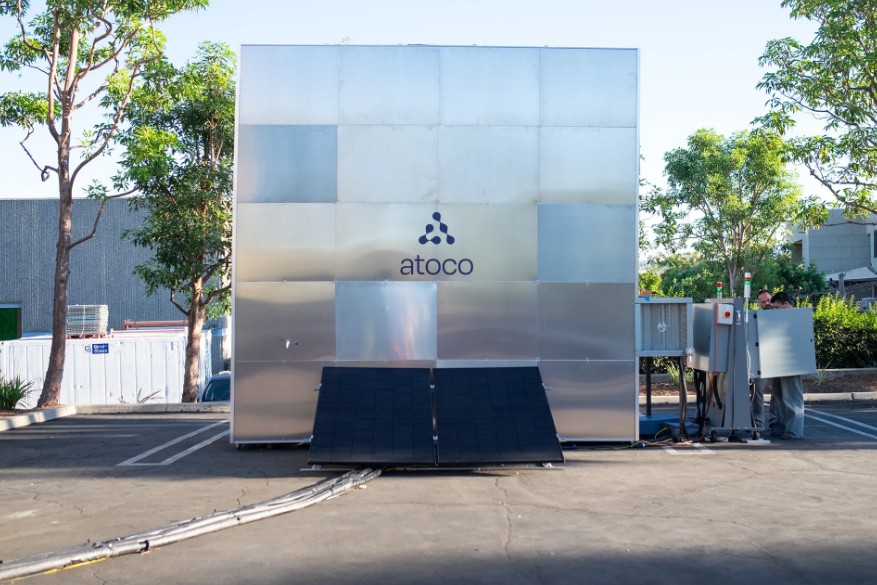
California startup Atoco is developing machines that harvest water from the air using metal-organic frameworks, or MOFs, and low-grade waste heat. The technology could give data centers a productive use for the heat they generate while helping address their substantial water demands, tells Wired.com (full article available to subscribers).
Atoco was founded by Omar Yaghi, whose work on MOFs contributed to his 2025 Nobel Prize in chemistry. These porous materials act like molecular sponges, capturing specific molecules within microscopic spaces. Atoco has engineered MOFs that attract water molecules from passing air and release them when exposed to relatively low temperatures.
The company’s latest system can operate without grid electricity for the water-harvesting process. Instead, heat as low as 100°F can release captured moisture. During Wired’s visit to Atoco’s Irvine, California, facility, the company simulated data center conditions using heat at about 150°F. Its prototype continued harvesting water even with relative humidity in the teens.
Data centers present a promising application because they generate enormous amounts of waste heat while some cooling systems consume millions of gallons of water daily. Atoco proposes connecting its machines to this heat source, effectively using one data center byproduct to produce another resource the facilities need.
The current prototype can generate up to 300 liters of water daily using heat equivalent to that produced by a 20-kilowatt data center. Atoco is developing a commercial unit capable of producing up to 1,000 liters per day, with multiple machines potentially operating together.
Scaling remains a major challenge. Atoco estimates its water production cost at $5 per metric ton, compared with $2 or less at some modern desalination facilities. MOFs also remain largely unproven at industrial scale.
Still, Atoco has conducted five prototype trials and is discussing data center pilots with major technology companies. Beyond data centers, the technology could eventually use waste industrial or geothermal heat to produce water in regions facing scarcity.
