

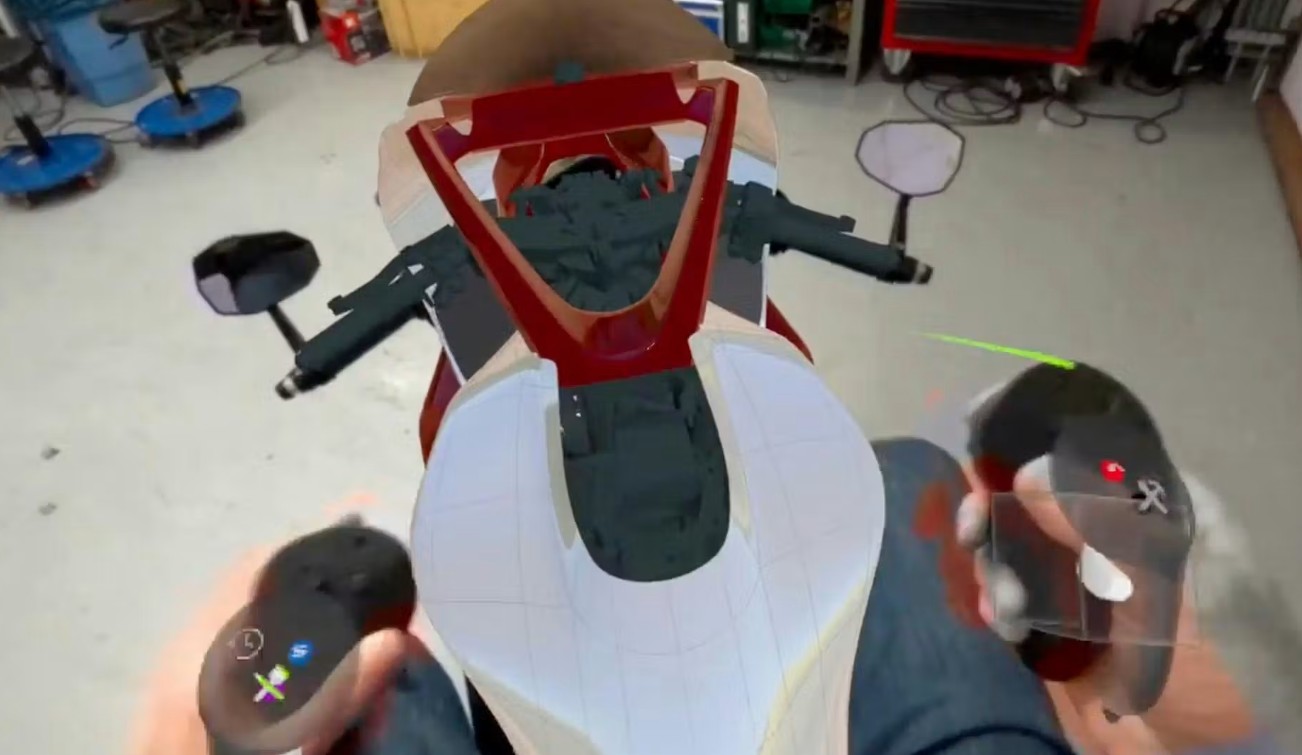
Augmented reality is becoming a practical engineering tool that allows product teams to evaluate digital designs in their intended physical environment before committing to expensive prototypes. Machine Design explains that AR is moving spatial validation earlier in product development, helping engineers, designers, manufacturing teams, and other stakeholders make better-informed decisions.
Physical prototypes remain important because they reveal proportions, ergonomics, manufacturing constraints, and other issues that can be difficult to understand from CAD models and renderings. AR does not eliminate prototypes. Instead, it gives teams spatial confidence earlier by displaying full-scale 3D data alongside real machines, components, and environments.
Automotive manufacturers are among the strongest adopters because physical prototypes can be extremely expensive. Teams can overlay digital designs on existing chassis, compare proposed vehicles with previous generations, and assess multiple design alternatives without building a physical version of each concept. This approach can reduce reliance on clay models while making the prototypes that are built more valuable.
AR is also expanding into detailed engineering. Cable routing provides one example. Engineers can visualize cable paths around equipment, examine assembly movement, evaluate maintenance access, and identify possible collisions before completing detailed models. They can then enter specialist engineering software with many spatial problems already understood.
The technology can also bring manufacturing, sustainability, serviceability, and compliance considerations into earlier design discussions. Potential problems can be identified before they become costly compromises later in development.
Improved spatial-computing hardware is accelerating this shift. High-resolution passthrough headsets provide depth and scale that phones and tablets could not deliver effectively. Some companies are already creating permanent studio spaces where teams can review continuously updated digital twins at full scale.
The article positions AR not simply as a visualization technology but as an engineering decision-making tool. By allowing digital and physical development to proceed together, spatial computing could help teams identify problems sooner, collaborate more effectively, and develop machines with fewer costly iterations.
