

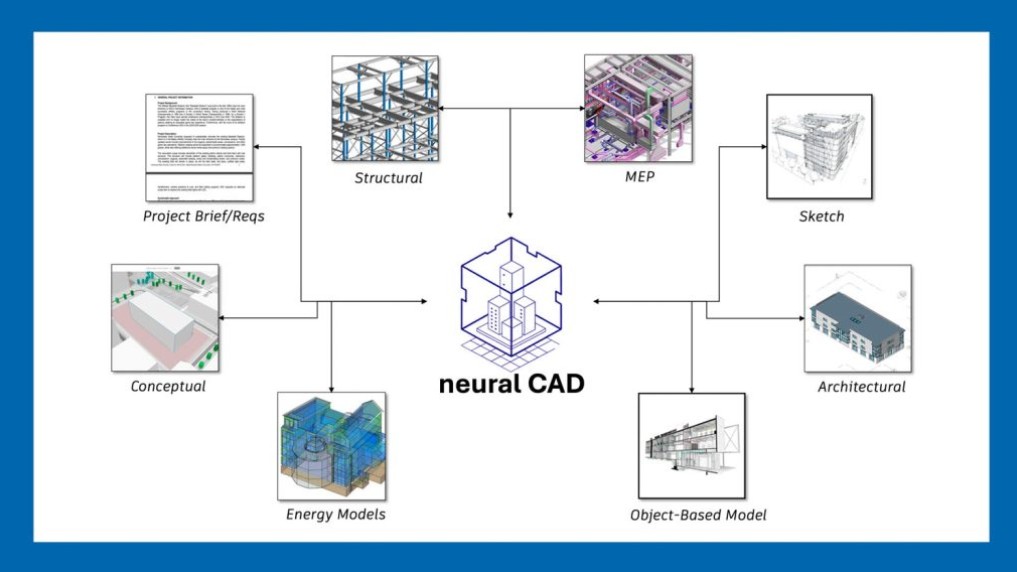
Autodesk is outlining an AI strategy that reaches far beyond adding chatbot features to existing design software. According to AEC Magazine, the company believes the future of engineering software depends on AI that understands geometry, engineering relationships, and project context rather than simply interpreting natural language. Instead of treating large language models as the core technology, Autodesk is developing domain-specific AI designed to work with the structured data that defines architecture, engineering, construction, and manufacturing projects.
The company argues that conventional large language models are not well suited to engineering because they generate probabilistic responses and can produce inaccurate information. In disciplines where errors affect safety, compliance, and construction costs, AI must be grounded in verified project data, engineering rules, and simulation. Another limitation is memory. Even models with context windows of up to one million tokens cannot process the enormous amount of geometry, metadata, specifications, schedules, regulations, and operational information contained in a modern BIM project. Autodesk believes the solution lies in intelligent retrieval and structured project knowledge rather than continually expanding context windows.
At the center of this strategy is Neural CAD, Autodesk’s geometry-aware foundation model. Unlike general-purpose AI systems that generate text or code, Neural CAD is designed to understand topology, parametric geometry, and the physical characteristics of engineering models. Autodesk says the technology can generate editable CAD representations while preserving engineering intent, enabling designers to explore concepts more naturally before refining them with traditional CAD tools. The company describes this as the first major shift in CAD interaction in more than four decades.
Autodesk is also promoting the concept of project intelligence, where AI maintains persistent knowledge about an entire project instead of responding to isolated prompts. This vision aligns more closely with cloud-native platforms such as Forma than with traditional desktop applications such as Revit, although Autodesk maintains that it will continue investing in Revit while expanding AI capabilities across its product portfolio. Questions remain about where the most advanced AI features will ultimately reside and how they will integrate with existing workflows.
While Autodesk’s roadmap presents a technically compelling direction, its success will depend on addressing concerns over data ownership, precision, cloud dependence, and pricing. If realized, the strategy could shift AI in CAD and BIM from a productivity assistant into an engineering system that understands design intent, project relationships, and the broader context behind every decision.
