

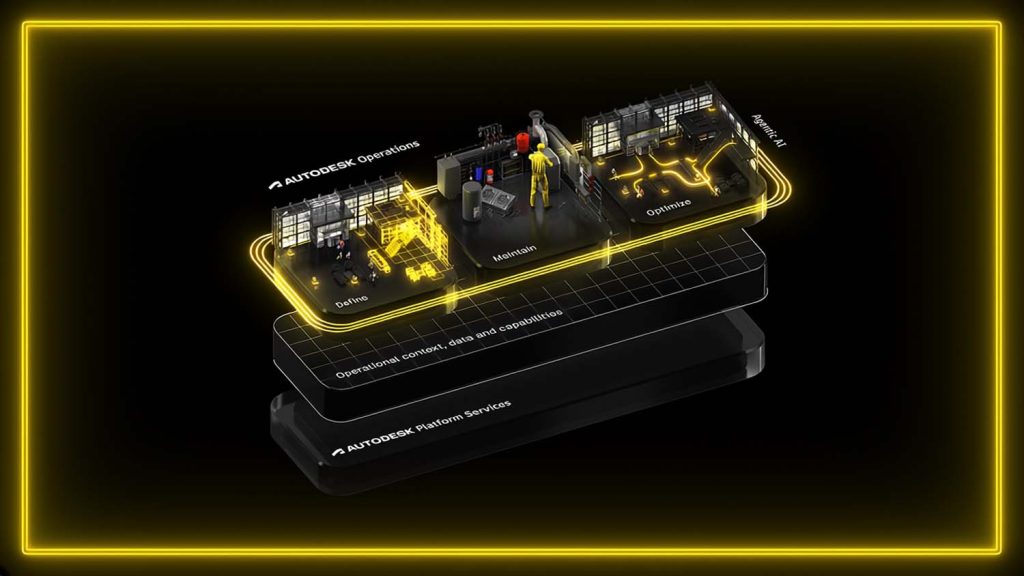
Autodesk is expanding beyond design and engineering into manufacturing operations with the full launch of Autodesk Operations, announced at Autodesk University 2026. The platform extends Autodesk’s Design & Make ecosystem by using Autodesk Tandem as a unified environment for connecting design, construction, manufacturing, and operational information, tells Develop 3D.
Tandem originated as Autodesk’s cloud-based digital twin platform for architecture, engineering, and construction. Its expanded role brings BIM and manufacturing data together, allowing companies to create operational digital twins of factories and other complex facilities. Teams can explore alternatives, identify bottlenecks, evaluate capacity, and determine whether proposed equipment or layout changes will improve production before making investments.
Autodesk is also connecting Tandem with other technologies. Integration with Forma allows BIM and manufacturing information to exist within the same project. Autodesk Assistant can help associate sensor data with assets, reducing the manual effort needed to establish and maintain digital twins.
A new integration with Autodesk FlexSim adds process simulation directly to the operations environment. At Autodesk University, the company demonstrated the technology using airport data to simulate TSA checkpoint flows. Teams could test screening-lane configurations and compare equipment utilization before changing the physical facility. The same approach could help manufacturers evaluate production layouts and capacity.
Maintenance is another part of the strategy. Connecting Tandem with the MaintainX computerized maintenance management system allows abnormal asset behavior to trigger maintenance workflows before equipment fails.
More significantly, Autodesk wants operational information to flow back into design. Maintenance events, failures, repairs, and performance improvements can inform future engineering decisions instead of remaining isolated in maintenance systems. This creates a continuous feedback loop between design and real-world performance.
The move places Autodesk closer to established factory-planning platforms such as Siemens Tecnomatix and Dassault Systèmes Delmia. Develop 3D notes that these competitors have a substantial manufacturing lead, but Autodesk’s experience connecting AEC, manufacturing, and operational data could provide a different route into the market.
