

Autodesk is expanding its AI strategy beyond individual applications with a standalone, agent-first Autodesk Assistant planned for 2027. Announced at Autodesk University, the system is designed to work across products, projects, and teams rather than operate as another AI feature inside tools such as Revit, AutoCAD, or Fusion, tells AEC Magazine.
Central to Autodesk’s approach is project context. The company argues that useful engineering and AEC AI must understand geometry, design intent, project history, and relationships among data. For example, if a structural element changes, Assistant could identify effects on fabrication, scheduling, cost, construction sequencing, and operations, then select appropriate Autodesk tools to address them.
The standalone Assistant is intended to act as an orchestration layer. It can gather project information, identify issues, analyze downstream consequences, and route tasks to suitable tools or AI agents. Customers will also be able to incorporate their own agents and tools. An AI orchestrator will select models according to factors including accuracy, speed, security, and cost.
Autodesk is also developing Assistant Builder to make agentic workflows more predictable. Users describe a task, and the system creates a multistep workflow that can be refined, saved as a template, and reused.
Geometry remains critical. Autodesk combines Neural CAD models with conventional geometric engines and selected third-party AI models. Neural CAD can extract information from drawings and 3D models and is being developed to generate and evaluate building site layouts based on project requirements.
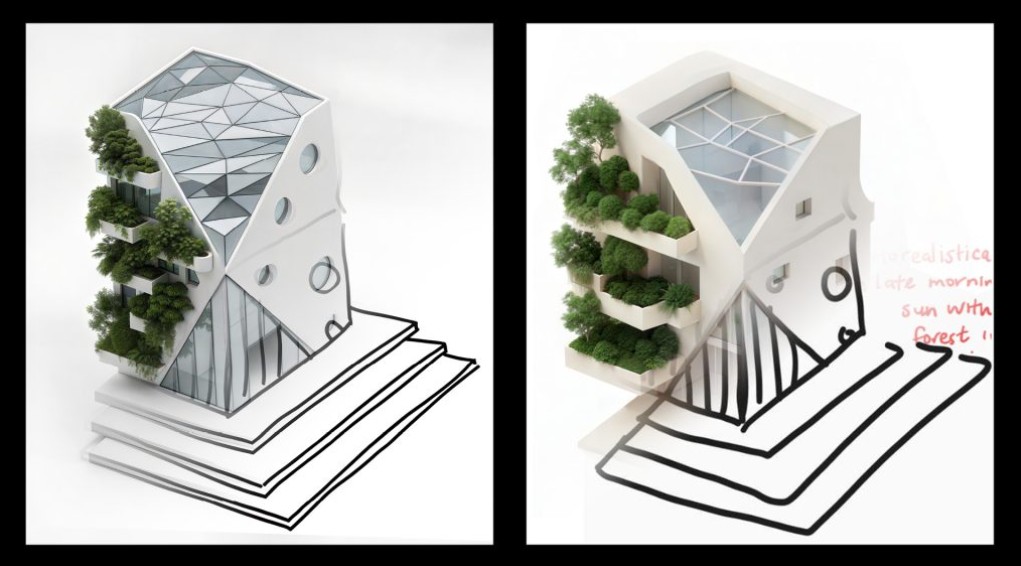
Further ahead, Autodesk Research is exploring interfaces that could reduce dependence on menus and typed commands. Project Quill, for example, combines sketches, annotations, and speech.
AEC Magazine notes that Autodesk’s broader vision raises important questions about governance, permissions, monitoring, and reversibility as AI agents gain the ability to act across project data and design applications.
