

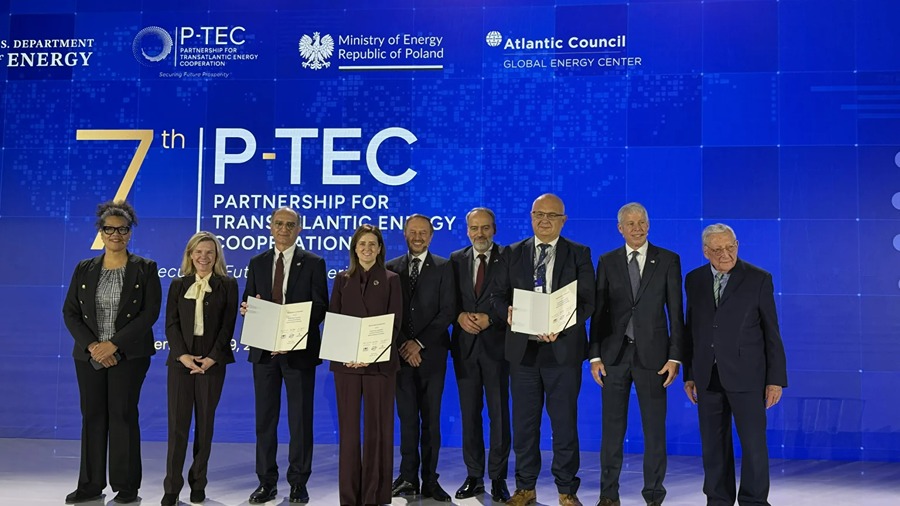
WARSAW, Poland, Nov 24, 2026 – Bechtel, Gdańsk University of Technology and the University of South Carolina’s Molinaroli College of Engineering and Computing have signed a memorandum of cooperation to support nuclear engineering education and workforce development in Poland and the United States. The agreement forms a framework for knowledge exchange between the two universities, with Bechtel’s support, and for identifying future areas of collaboration. The memorandum was signed during the 2026 Partnership for Transatlantic Energy Cooperation (PTEC) forum in Warsaw, Poland.
The agreement builds on Bechtel’s existing relationships with both universities. A partnership announced in October 2026 between Bechtel and the Molinaroli College established the Bechtel Nuclear Energy Workforce Development Fund to support nuclear education and workforce development. Bechtel has also worked with Gdańsk University of Technology since 2024.
“Developing nuclear energy requires not only technology and infrastructure, but above all people, knowledge, and expertise,” said Dena Volovar, president of Bechtel’s Nuclear, Security & Environmental business. “This agreement brings together the capabilities of two leading universities in Poland and the United States with Bechtel’s experience in delivering nuclear projects. In doing so, we want to create a lasting platform for knowledge exchange that will support the development of the workforce needed to initially deliver ambitious nuclear energy programs and to maintain the nuclear industry for generations to come.”
“This collaborative partnership creates an opportunity for our universities to learn from one another and connect cross-disciplinary engineering education more directly to the needs of a growing global nuclear industry,” said Hossein Haj-Hariri, dean of the Molinaroli College of Engineering and Computing at the University of South Carolina. “We are grateful to begin this relationship with Gdańsk University of Technology and Bechtel and to explore practical ways our combined expertise can help prepare the next generation of engineering professionals for the future of nuclear energy.”
Bechtel’s existing academic activities in Poland include agreements signed in 2024 with Warsaw University of Technology and Gdańsk University of Technology. The company also works with the University of Gdańsk.
“Gdańsk University of Technology wants to actively use its scientific and engineering capabilities to support areas of strategic importance to Poland, and nuclear energy is one of them. Our cooperation with Bechtel, which we have been developing since 2024, already connects us with the experience of the U.S. nuclear sector,” said Krzysztof Wilde, Rector of Gdańsk University of Technology. “The partnership with the University of South Carolina is a natural extension of this cooperation, adding a strong academic component and giving us an opportunity for even broader exchange of knowledge, experience, and expertise. This is a relationship we want to build for many years to come.”
Bechtel offers summer internships in nuclear, civil and structural, and electrical engineering. Its specialists also conduct lectures at Polish universities. Nearly 250 students attended a May 2026 lecture at Gdańsk University of Technology. On Nov. 16, Bechtel experts addressed approximately 130 students at Warsaw University of Technology. Another lecture took place at Gdańsk University of Technology during PTEC.
Connection to Poland’s Nuclear Power Program
The cooperation also addresses workforce preparation for Poland’s nuclear energy program. The country’s first nuclear power plant is planned for the Lubiatowo-Kopalino site in the Pomerania region.
Polskie Elektrownie Jądrowe (PEJ) is the project developer and investor. As part of the Bechtel-Westinghouse consortium, Bechtel is responsible for engineering, procurement and construction of the plant, which will use Westinghouse AP1000 reactor technology.
Bechtel maintains offices in Warsaw and Gdańsk. The Bechtel-Westinghouse consortium employs almost 200 Polish professionals, while more than 1,400 representatives from Polish companies have engaged with the nuclear project through suppliers.
Source: Bechtel
About Bechtel

Bechtel Corp., founded in 1898 and based in Reston, VA, is a privately held global engineering, procurement, construction and project management company. It delivers infrastructure projects across sectors including energy, transportation, mining, metals, nuclear security, environmental cleanup and advanced manufacturing. With operations in more than 160 countries, Bechtel has completed more than 25,000 projects and employs over 50,000 people worldwide. Its services include the development of liquefied natural gas facilities, power plants, metro systems, pipelines and complex infrastructure. The company works with government agencies, industrial clients and private developers to support national and regional development goals.
About Gdańsk University of Technology

Gdańsk University of Technology is a public technical university headquartered in Gdańsk, Poland. Established in 1904, it became a Polish public institution in 1945. The university offers undergraduate, graduate, doctoral and postgraduate programs in engineering and related fields. Its eight faculties cover architecture, civil engineering, electronics, computing, mechanical engineering and chemical sciences. The institution conducts research in materials science, energy, manufacturing and information technology. It operates laboratories and research centers that support academic and industrial projects. The university works with businesses, government agencies and research institutions on technical development. It also provides laboratory services, professional training and research support to external organizations. Its students, researchers, industrial partners and public institutions use these services. The university reports more than 16,000 students from over 60 countries. There are about 3,000 employees and 1,300 academic teachers.
About University of South Carolina

University of South Carolina is a public research university headquartered in Columbia, SC. Founded in 1801, it offers undergraduate, graduate, doctoral and professional degree programs. Its academic fields include engineering, computing, business, medicine, law, nursing, education and public health. The university conducts research in science, technology, healthcare, engineering and other disciplines. Its laboratories and research centers support academic studies and projects with external organizations. The institution works with businesses, government agencies, healthcare providers and research institutions. It also offers continuing education, professional training and research services. Its students, researchers, employers, government agencies and industry partners use these services. The university system operates eight campuses across 20 locations in South Carolina.
About Molinaroli College of Engineering and Computing
Molinaroli College of Engineering and Computing is part of the University of South Carolina in Columbia, SC. Established in 1909, the college received its current name in 2024. It offers undergraduate, graduate and doctoral programs in engineering, computing and related disciplines. Its academic programs cover mechanical, electrical, chemical, civil, biomedical, aerospace and industrial engineering. The college also provides education in computer science and information technology. Its research activities cover AI, energy, materials science, healthcare and manufacturing. The institution operates laboratories and research centers for academic and industry projects. It works with manufacturers, technology companies, government agencies and research organizations. Its services include engineering education, technical research, professional training and industry partnerships. Students, researchers, employers and public institutions use its educational and research services.
